Er. Koneru Satyanarayana, President, KL Deemed to be University, says long term water resilience depends on integrating reuse, recharge, and monitoring into campus operations
KL Deemed to be University has adopted a data led and systems driven approach to campus water management, positioning water resilience as a core component of long term infrastructure planning rather than a standalone sustainability initiative. The university’s model integrates reuse, recharge, and continuous monitoring to address growing pressure on water resources within large academic campuses.
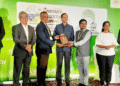
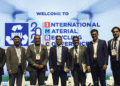
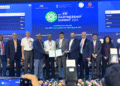
The approach was recently highlighted at the CII–SR Industrial Climate Action Competition, held alongside the Energy Transition Summit in Chennai on 30 January 2026. The platform evaluated institutions on measurable environmental outcomes, implementation depth, scalability, and alignment with climate action priorities.
KL Deemed to be University’s water strategy is structured around a four pillar framework of Reduce, Recharge, Recycle, and Reuse. At the operational level, this framework is supported by a wastewater recycling system with a capacity of 2,180 kilolitres per day, which currently supplies more than half of the campus’s overall water requirement.
Advanced sewage treatment technologies, including Moving Bed Biofilm Reactor and ARBiT systems, have enabled significant efficiency gains. Water recovery rates on campus have increased from 53 percent to 74 percent, allowing treated water to be redirected for non potable uses such as flushing, landscaping, and utility operations.
Groundwater replenishment forms another critical layer of the system. The campus operates 32 rainwater harvesting pits with a combined recharge potential of approximately 3.7 lakh litres per day. These structures are designed to support aquifer sustainability while reducing dependence on external water sources.
Real time monitoring and demand side management have further strengthened outcomes. Building level interventions and efficient irrigation practices have resulted in a 54 percent reduction in water consumption across built spaces and a 42 percent reduction in landscape irrigation demand. These efficiencies have been achieved while maintaining a green cover exceeding 10.6 lakh square feet across the campus.
Commenting on the university’s approach, Er. Koneru Satyanarayana, President of KL Deemed to be University, said long term water resilience requires integrating infrastructure, technology, and governance into everyday campus operations. He added that sustainability planning at the university is designed to support future ready education by aligning environmental responsibility with institutional growth.
The model reflects a broader shift in how academic institutions are responding to climate related resource constraints. By embedding data, monitoring, and reuse into core infrastructure systems, KL Deemed to be University has demonstrated how campuses can function as living laboratories for climate responsive planning.
The university’s water stewardship efforts add to its wider track record of environmental initiatives that have received national level attention from bodies such as the Ministry of Jal Shakti, Water Digest, CII–SR, and AICTE, reinforcing the role of higher education institutions in advancing scalable climate solutions.
At Prittle PrattleNews, featuring you virtuously, we celebrate the commitment and innovation. Led by Editor-in-Chief Smruti Bhalerao, our platform is dedicated to sharing impactful stories that inspire change and create awareness. Follow us on LinkedIn, Instagram, and YouTube for more stories that matter.




















































































































Share your unique link and earn up to 40% commission!