




From Thal Sena Bhawan for the Indian Army and ONGC’s International Convention Centre to Technocity Kerala, American Embassy School, Rashtrapati Udyan Dehradun, Taj Lucknow, and Queen Elizabeth School Gurugram, projects by CP Kukreja Architects reflect how institutions, cities, and public life are being reshaped across India.
India’s built environment is undergoing a shift that is less visible in skylines and more evident in institutions, campuses, landscapes, and civic spaces. As the country moves beyond rapid expansion toward consolidation and long-term capacity building, architecture is increasingly being asked to serve systems rather than symbols. The choices being made today, often away from the spotlight, are beginning to reshape how cities function, how institutions operate, and how public life is experienced.
Across defence infrastructure, educational campuses, technology districts, hospitality developments, and public parks, a common thread is emerging. The emphasis is moving away from visual dominance toward clarity, durability, and contextual response. This transition reflects a broader understanding that architecture must now operate at scale while remaining sensitive to ecology, access, and everyday use.
One of the clearest expressions of this shift can be seen in large national institutions such as Thal Sena Bhawan, the upcoming headquarters of the Indian Army in Delhi. Rather than presenting itself as a singular monument, the project translates organisational logic into spatial structure. Circulation efficiency, internal connectivity, security, and landscape integration drive the planning approach. The architectural language draws meaning from institutional values rather than decorative assertion, signalling a move toward purpose-led design in state infrastructure.
A similar institutional clarity is visible in the International Convention and Expo Centre being developed for ONGC in Goa. Conceived as a composite environment for training, knowledge exchange, and large-format public engagement, the campus prioritises functional separation, operational flow, and adaptability. Its architectural expression responds to Goa’s coastal context without resorting to pastiche, indicating how large public-sector projects are beginning to balance identity with restraint.
Education architecture is also undergoing recalibration. At Queen Elizabeth School in Gurugram, historical lineage is acknowledged through proportion, materiality, and spatial rhythm, while contemporary requirements are addressed through planning and infrastructure. The project reflects a growing recognition that schools are no longer just academic facilities but environments that shape social behaviour, movement, and learning culture over decades.
This rethinking extends to international education environments as well. The phased redevelopment of the American Embassy School in New Delhi demonstrates how architecture can evolve without disrupting daily life. The project’s careful sequencing allows learning to continue uninterrupted while gradually transforming the campus into a more flexible and future-ready environment. Here, architecture acts as an enabler rather than a disruption, a principle increasingly central to large institutional projects.
Technology-driven urban development offers another lens into this changing architectural language. Technocity and Technopark Phase IV in Thiruvananthapuram represent a shift from isolated IT buildings to integrated urban districts. The masterplan prioritises pedestrian movement, ecological corridors, and mixed-use interaction, reframing the idea of a technology park as a lived environment rather than a purely commercial enclave. Sustainability, mobility, and public access are embedded at the planning level, suggesting a more mature approach to economic infrastructure.
Public landscapes, too, are being reimagined as essential urban systems. The redevelopment of Rashtrapati Udyan in Dehradun places ecology, recreation, and cultural memory on equal footing. Instead of functioning as ornamental green space, the park is designed as an active public environment with layered experiences, biodiversity strategies, and everyday accessibility. Such projects indicate a renewed understanding of public parks as civic infrastructure rather than aesthetic additions.
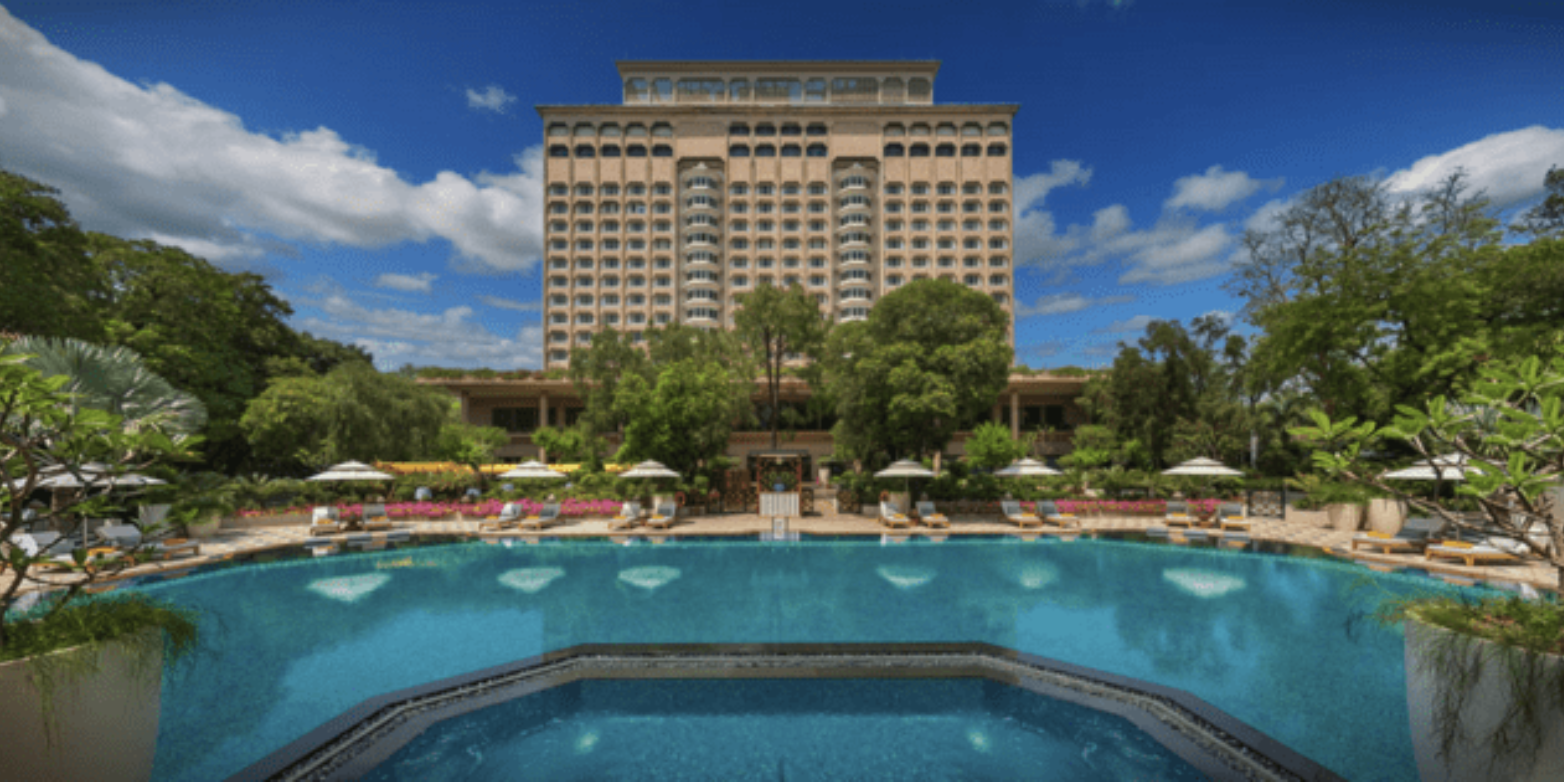
Hospitality architecture is responding to similar pressures. The expansion of Taj Lucknow demonstrates how legacy brands are choosing continuity over spectacle. The design extends the existing architectural vocabulary through proportion, spatial organisation, and contextual orientation, reinforcing the idea that luxury today is increasingly defined by calm, coherence, and spatial quality rather than visual excess.
Taken together, these environments reveal a broader pattern. Architecture in India is becoming less about individual statements and more about systems that must endure. Institutions are demanding buildings that can adapt, landscapes that regenerate, campuses that function seamlessly, and cities that support everyday life without constant reinvention.
This quiet shift may not dominate headlines, but its impact will be lasting. As these projects move forward, they collectively suggest that India’s architectural language is evolving toward one that values longevity over immediacy, responsibility over display, and context over imitation. What the country is choosing to build today is setting the tone for how it will live, work, and gather for decades to come.
At Prittle Prattle News, we honor your dedication and inventiveness led by showcasing you in a positive light. Under the direction of Editor-in-Chief Smruti Bhalerao, our platform is committed to disseminating powerful narratives that raise awareness and motivate change. For more important stories, follow us on LinkedIn, Instagram, and YouTub
About Prittle Prattle News
Prittle Prattle News is a digital news publication covering business, technology, healthcare, education, lifestyle, public affairs and other developments from India and around the world. Led by Editor-in-Chief Smruti Bhalerao, we publish timely news, industry updates and feature stories for a broad readership.
















Add Comment