



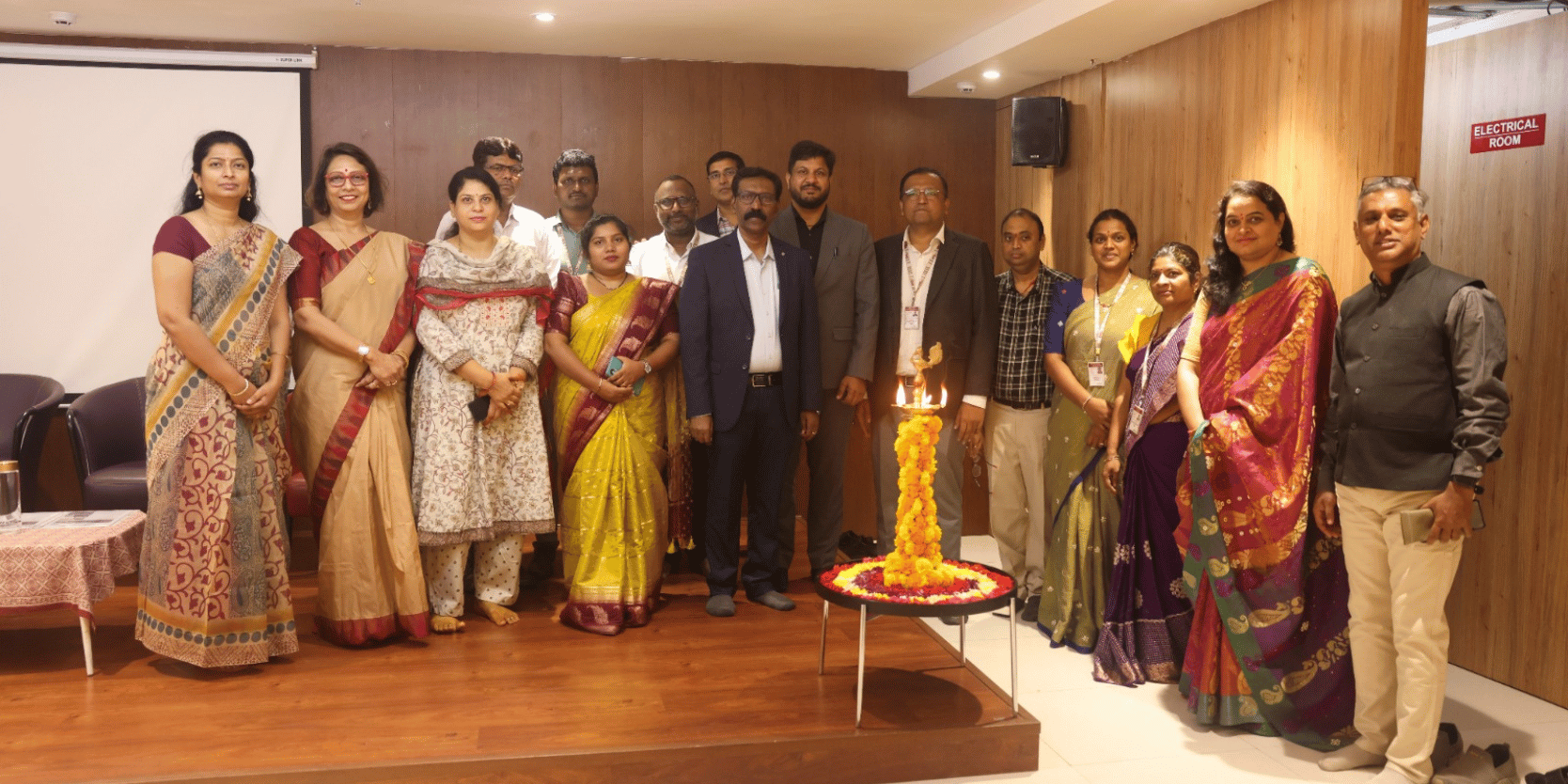
The consultation convened by Ministry of Skill Development and Entrepreneurship with the Government of Maharashtra brought together leading manufacturing and service sector companies to review industry linked skilling plans
The Ministry of Skill Development and Entrepreneurship convened an industry consultation in Pune as part of the ongoing rollout of the PM SETU scheme aimed at transforming Industrial Training Institutes across the country. The programme was held at the Yashwantrao Chavan Academy of Development Administration and brought together senior government officials and industry representatives to discuss implementation priorities and industry participation.
The consultation was led by Debashree Mukherjee, Secretary, Ministry of Skill Development and Entrepreneurship, Government of India, along with Manisha Verma, Additional Chief Secretary, Skills, Employment, Entrepreneurship and Innovation Department, Government of Maharashtra. Officials outlined the objectives of PM SETU and highlighted the role of industry in governance, curriculum alignment, trainer development, and employment outcomes.
More than 40 companies participated in the discussions, representing sectors such as automotive, construction, textiles, fast moving consumer goods, electronics, oil and gas, and renewable energy. Industry participants included Mahindra, Tata Group, Tata Motors, Bharat Electronics, Godrej, and Fiat. The sessions focused on the proposed hub and spoke model for ITIs, the creation of industry led Special Purpose Vehicles, curriculum updates, trainer upskilling, and mechanisms to improve placement outcomes.
Speaking at the consultation, Debashree Mukherjee said that PM SETU is designed to make ITIs more aligned with industry requirements by strengthening training quality, modern pedagogy, trainer performance, and measurable employment outcomes. She noted that the scheme goes beyond infrastructure upgrades and seeks deeper industry engagement in governance and training delivery.
She further stated that PM SETU is intended to create sustained partnerships with industry, where employers play a direct role in curriculum design and trainer development to ensure alignment with evolving technologies and shopfloor requirements. She added that the initiative also offers benefits to industry in the form of a steady pipeline of job ready trainees, reduced recruitment costs, and access to modern training facilities and equipment.
Reaffirming the state government’s support, Manisha Verma said that Maharashtra will provide an enabling environment for industry participation under the scheme. She stated that the state will facilitate implementation through coordination with stakeholders, supportive administrative arrangements, and regular engagement with industry partners so that ITIs in Maharashtra develop strong linkages with employers and improved employment outcomes for trainees.
Industry representatives expressed interest in the collaborative framework proposed under PM SETU. Inputs from participants in the automotive and renewable energy sectors highlighted the potential of the initiative to support the development of a future ready workforce while enabling ITIs to function as centres for industry aligned training and innovation.
The discussions also highlighted strategic benefits for participating companies, including involvement in governance structures, opportunities to contribute to curriculum development and training delivery, enhanced employer visibility, and closer alignment with corporate social responsibility and environmental social governance objectives.
As part of the engagement, participants visited ITI Aundh Pune, ITI Girls Pune, ITI Pimpri Chinchwad, and Fronius India Pvt. Ltd. in Bhosari. The visits provided first hand exposure to institutional infrastructure, training ecosystems, and examples of industry integrated skilling models.
PM SETU was launched by Prime Minister Narendra Modi in October 2025 with an outlay of ₹60,000 crore over five years. The scheme aims to convert ITIs into government owned but industry managed institutions by upgrading infrastructure, introducing new courses, and embedding industry led governance. The objective is to build a skilled and employable workforce aligned with growth sectors and the national vision of Viksit Bharat 2047.
At Prittle PrattleNews, featuring you virtuously, we celebrate the commitment and innovation. Led by Editor-in-Chief Smruti Bhalerao, our platform is dedicated to sharing impactful stories that inspire change and create awareness. Follow us on LinkedIn, Instagram, and YouTube for more stories that matter.
About Prittle Prattle News
Prittle Prattle News is a digital news publication covering business, technology, healthcare, education, lifestyle, public affairs and other developments from India and around the world. Led by Editor-in-Chief Smruti Bhalerao, we publish timely news, industry updates and feature stories for a broad readership.















Add Comment