




Dr Daya Pandey of the University of Leeds and Dr Vinay Yadav of IIT Kharagpur said stronger waste systems, circular economy practices and agricultural residue management are critical to India’s cleaner cities and 2070 net zero goals.
International research partnerships led by the University of Leeds are examining how India can reduce pollution, improve public health and move closer to its 2070 net zero target through better waste management and agricultural residue use.
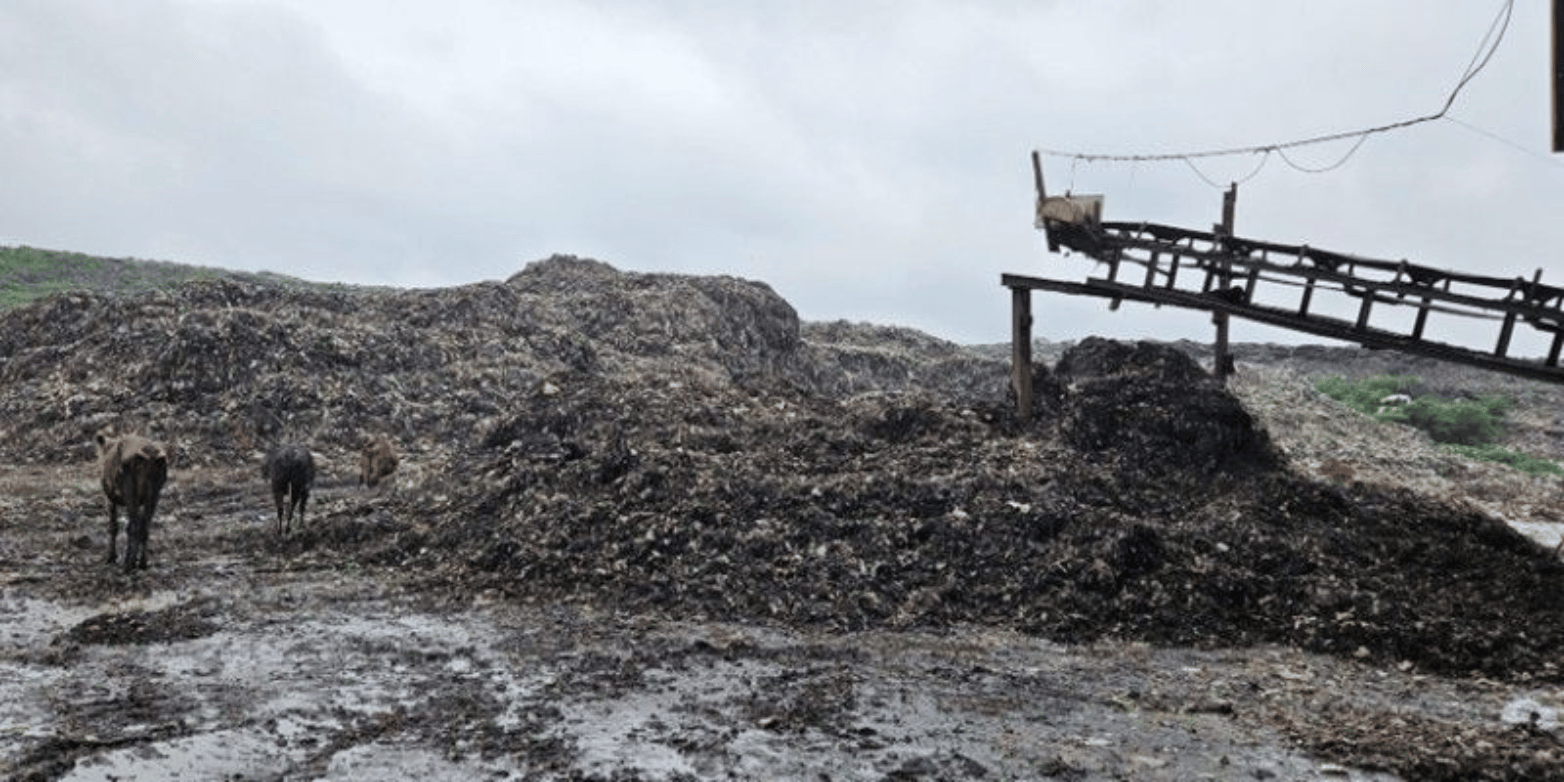
The research focuses on two major environmental challenges in India: municipal solid waste in fast growing cities and agricultural waste burning in rural areas. The burning of agricultural waste, along with dumping, burning and poor segregation of household waste, contributes to air pollution, water contamination and the spread of infectious diseases.
Experts from the University of Leeds have worked with researchers in India, Hong Kong and the UK on two studies aimed at supporting India’s decarbonisation efforts.
One study, published in the Journal of Industrial Ecology, examines municipal solid waste generated in urban areas. It says urban municipal solid waste could increase twelve fold by 2050 at current consumption levels.
“If we carry on with business as usual, mountains of garbage will surround India’s major cities,” said Dr Daya Pandey, Assistant Professor in Energy Systems in the School of Mechanical Engineering at the University of Leeds.
The study analyses historic waste trends and projects future scenarios up to 2050. The international research team argues that greater infrastructure investment is needed to build modern circular waste systems that reduce harmful emissions and human exposure to toxic substances.
The recommendations include better segregation at source, expanded recycling and processing facilities and reduced dependence on landfill. These measures are seen as important to India’s 2070 net zero target and the Solid Waste Management Rules 2026, which focus on minimising landfill and promoting source segregation.
The research includes experts from the University of Leeds, King’s College London and the London School of Hygiene and Tropical Medicine in the UK, along with Indian institutions including IIT Kharagpur and CSIR National Environmental Engineering Research Institute. Researchers from Manipal Institute of Technology, Albokoes EnviroSustain Pvt Ltd and Hong Kong Baptist University also contributed.
“UK institutions bring expertise in public health, climate policy and net zero analysis, while Indian partners contribute deep understanding of governance, financing and human behaviour,” said Dr Daya Pandey.
A second study by the University of Leeds and IIT Kharagpur, published in Biomass and Bioenergy, looks at agricultural residue management. The study notes that the agricultural sector is the second largest contributor to India’s greenhouse gas emissions, largely due to in situ crop residue burning.
The study says India can use its agricultural waste to generate renewable energy and high value products through technology, policy changes and circular bioeconomy approaches. It concludes that sustainable agricultural residue management can reduce emissions while supporting rural livelihoods.
Dr Pandey said India’s waste profile has changed over time. “In the past, MSW in India was largely food waste. Today, due to rising household incomes and changing consumption habits, it now contains a higher proportion of dry solid waste, such as packaging material. There is no silver bullet for tackling this ever growing problem sustainably. Fast developing countries like India therefore need waste management systems that are locally adapted and shaped by policy. This is where UK India academic collaboration proves valuable: UK institutions bring expertise in public health, climate policy and net zero analysis, while Indian partners contribute deep understanding of governance, financing and human behaviour.”
“India’s cities are heading toward a severe waste crisis. This is not just about waste generation and its management, but it’s more about public health, climate impact and the livability of our cities. The good news is that this crisis is preventable. With smarter policies, better infrastructure and a shift toward a circular economy where waste is reduced, reused and recycled, we can turn this challenge into an opportunity. But the time to act is now, before the problem becomes unmanageable,” said Dr Vinay Yadav, Assistant Professor at IIT Kharagpur.
Mohit Arora, Lecturer in Engineering at King’s College London, said sustainability and decarbonisation across the developing world remain a global responsibility in which universities have an important role.
The University of Leeds has an academic partnership with IIT Kharagpur. A Memorandum of Understanding signed in 2024 covers joint supervision of PhDs in the Faculty of Engineering and Physical Sciences, Transport Studies and Biological Sciences. A delegation led by Leeds Vice Chancellor and President Professor Shearer West visited New Delhi in June 2025 to discuss research and student education alliances across medicine, engineering, biotechnology and social sciences.
At Prittle PrattleNews, featuring you virtuously, we celebrate the commitment and innovation. Led by Editor-in-Chief Smruti Bhalerao, our platform is dedicated to sharing impactful stories that inspire change and create awareness. Follow us on LinkedIn, Instagram, and YouTube for more stories that matter.
About Prittle Prattle News
Prittle Prattle News is a digital news publication covering business, technology, healthcare, education, lifestyle, public affairs and other developments from India and around the world. Led by Editor-in-Chief Smruti Bhalerao, we publish timely news, industry updates and feature stories for a broad readership.














Add Comment