







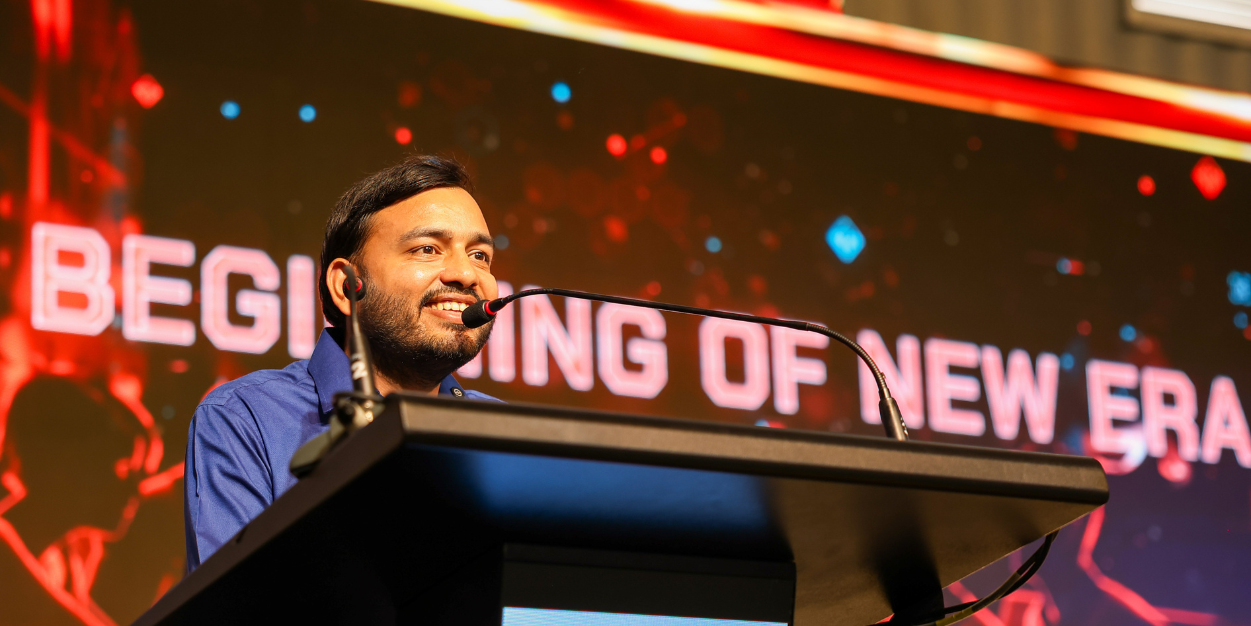

Shrish Anand Lal, Executive Director and Chief Business Officer at New Street, the company behind MiFiX.ai, explains why data quality, legacy systems, governance, unclear outcomes and fading executive support continue to prevent enterprise AI pilots from reaching production.
Enterprise AI is no longer struggling to prove that the technology can work. The harder challenge begins after the pilot, when businesses must connect AI with existing systems, measurable outcomes, governance and everyday operations without allowing early momentum to disappear.
Enterprise AI has moved well beyond experimentation. Organisations are now testing artificial intelligence across customer service, finance, operations, software development and supply chains, yet the distance between a successful pilot and a dependable production system remains considerable.
The problem is increasingly less about whether an AI model can perform a task and more about whether the organisation around it is ready to support that performance at scale.
Shrish Anand Lal, Executive Director and Chief Business Officer at New Street, the company behind MiFiX.ai, identifies seven recurring reasons why enterprise AI projects struggle after promising pilots.
The first is data. Pilot programmes are often developed with carefully selected and prepared information. Production systems rarely offer that luxury. Enterprise data tends to be fragmented across applications, departments and formats. Once an AI system encounters inconsistent or incomplete information, performance that appeared convincing during testing can become difficult to reproduce.
The second problem is the absence of a clear definition of success.
A working model may demonstrate technical capability, but that does not automatically establish business value. Enterprises need to know what the initiative is expected to improve, whether that is cost, productivity, turnaround time, customer experience or another measurable outcome. Without that clarity, further investment becomes harder to defend once the pilot ends.
Legacy technology presents the third obstacle.
Many organisations still depend on applications and infrastructure that were never designed for AI based workflows. Replacing these systems before introducing AI can create lengthy and expensive transformation programmes.
Lal argues that organisations can move faster by placing a configuration and orchestration layer over existing systems rather than treating complete legacy replacement as a prerequisite for AI adoption.
The fourth issue is organisational change.
Enterprise AI cannot remain confined to a small innovation or technology team once it reaches production. Business functions, technology teams, operations, security and compliance all become involved. A pilot can succeed with a handful of specialists, while scaled deployment requires agreement across functions that may have very different priorities.
Operational readiness forms the fifth challenge.
An AI model entering production requires monitoring, security, governance, updates, auditability and clear accountability. These requirements cannot be treated as work that begins after the pilot.
According to Lal, governance and human approval need to be considered from the beginning. He advocates using AI during configuration and design while deterministic and auditable systems handle execution wherever production environments require predictable outcomes.
The sixth reason is expectation.
Businesses frequently expect AI to produce dramatic results within a short planning cycle. Enterprise systems rarely mature that quickly. Value usually emerges through repeated improvement, deployment and refinement.
Smaller early deployments can therefore be more useful than ambitious programmes that take months to produce visible results. A clearly defined workflow delivered quickly can demonstrate value, build confidence and create room for larger investments later.
The seventh challenge is executive sponsorship.
AI programmes often extend across several budget cycles. Leadership priorities can change long before the technology reaches its intended scale. When visible progress slows, funding and organisational attention can follow.
Lal believes the answer lies in producing measurable outcomes regularly rather than asking senior leadership to wait for a single distant transformation milestone. Continuous evidence of business value keeps the case for further investment alive.
Together, these seven issues point to a larger change in the enterprise AI conversation.
The first phase was dominated by experimentation and adoption. The next will be decided by execution.
Businesses will need to integrate AI into existing processes, deal pragmatically with legacy technology, design governance into systems from the outset and measure commercial outcomes rather than the number of pilots completed.
The organisations that gain the most from enterprise AI may therefore not be those running the largest number of models. They may be those that build systems capable of moving from experimentation into dependable, measurable and auditable operations.
For Lal, the distinction is ultimately architectural and operational. AI can support design and decision making, but production environments need clarity, accountability and systems that businesses can inspect and trust.
That is where the real enterprise AI race is beginning.
At Prittle Prattle News, featuring you virtuously, we celebrate the commitment and innovation. Led by Editor-in-Chief Smruti Bhalerao, our platform is dedicated to sharing impactful stories that inspire change and create awareness. Follow us on LinkedIn, Instagram, and YouTube for more stories that matter.
About Prittle Prattle News
Prittle Prattle News is a digital news publication covering business, technology, healthcare, education, lifestyle, public affairs and other developments from India and around the world. Led by Editor-in-Chief Smruti Bhalerao, we publish timely news, industry updates and feature stories for a broad readership.































[…] 7 Reasons Enterprise AI Projects Fail After the Pilot Stage, according to Shrish Anand Lal […]