











A 25 year old woman who had lived with liver cirrhosis since childhood underwent a successful liver transplant at CARE Hospitals, Banjara Hills, Hyderabad. A specialised desensitization protocol enabled the medical team to proceed despite blood group incompatibility between the patient and her elder sister, who donated part of her liver.
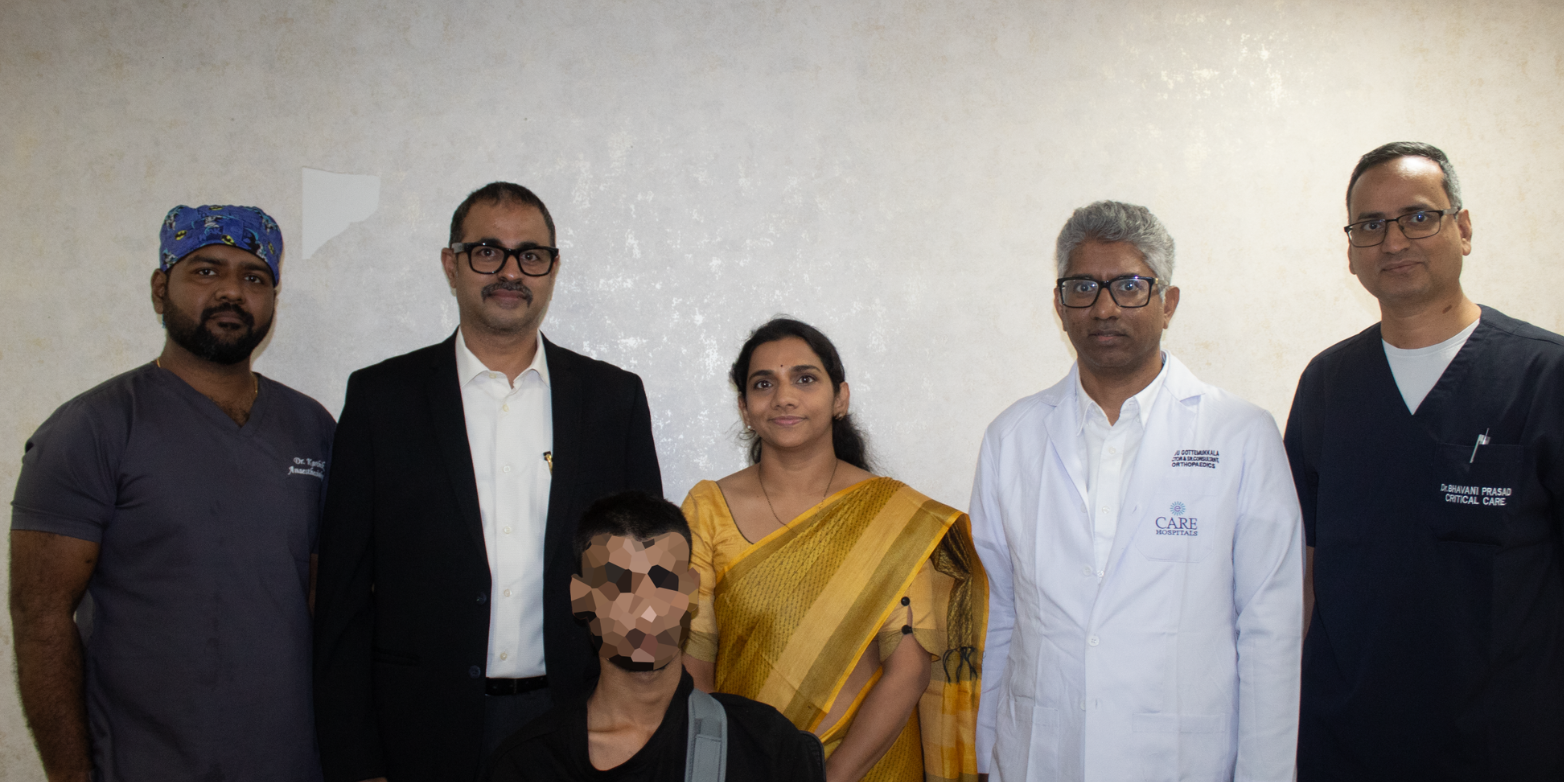
Dr. Sonal Asthana, Senior Consultant, HPB and Liver Transplant Surgeon; Dr. Kumaraswamy, Senior Consultant, Liver Transplant and HPB Surgery; Dr. Anand Sagar Ragate, Consultant, Liver Transplant and HPB Surgery; and Abhinav Joshi, ZCOO, CARE Hospitals, discuss the specialised treatment that enabled transplantation between two sisters with different blood groups.
A 25 year old woman with a history of liver cirrhosis dating back to childhood has successfully undergone a blood group incompatible liver transplant at CARE Hospitals, Banjara Hills, Hyderabad.
The transplant was performed after the medical team followed a specialised desensitization protocol to address the difference between the patient’s blood group and that of her living donor.
The patient had been diagnosed with liver cirrhosis at the age of 10 and had been receiving care from Dr. Kumaraswamy, Senior Consultant, Liver Transplant and HPB Surgery, CARE Hospitals, in Vizag.
As her liver disease progressed, transplantation became necessary.
Her elder sister volunteered to become a living liver donor. However, the patient’s blood group was O positive, while her sister’s was A positive.
This difference created an additional clinical challenge because the donor and recipient were ABO incompatible.
Specialised Preparation Before Transplantation
The patient was referred to CARE Hospitals, Banjara Hills, for further evaluation and transplant planning.
The transplant team decided to proceed with a specialised desensitization protocol, an approach used in selected cases to reduce the immune risks associated with blood group incompatible transplantation.
The patient remained under close medical observation for 15 days before the procedure.
Following the preparatory treatment and clinical assessment, the team performed the liver transplant.
She subsequently received postoperative monitoring and medical care before being discharged 15 days after surgery.
According to the hospital, the patient has recovered well and expressed gratitude to the medical and nursing teams involved in her treatment.
Doctors Explain Blood Group Incompatibility
Blood group compatibility is an important consideration in living donor liver transplantation.
An ABO incompatible transplant can involve additional risks because the recipient’s immune system may react to the donor organ.
Specialised medical protocols can sometimes make transplantation possible, but the approach requires careful assessment, preparation and monitoring.
Dr. Sonal Asthana, Senior Consultant, HPB and Liver Transplant Surgeon, CARE Hospitals, Banjara Hills, said, “Many families believe that a blood-group mismatch automatically rules out living donor liver transplantation.”
He explained that a blood group difference does not necessarily eliminate transplantation as an option for every patient.
Dr. Asthana added, “The most important message is that patients with advanced liver disease should seek a timely transplant evaluation rather than assume that such challenges leave them without hope.”
The suitability of an ABO incompatible transplant depends on individual medical circumstances, including the health of the donor and recipient and the risks identified by the transplant team.
Such procedures are not appropriate for every patient, and successful outcomes cannot be guaranteed.
Long History of Liver Disease
The patient’s condition required medical attention over many years, beginning when she was 10.
Dr. Kumaraswamy, Senior Consultant, Liver Transplant and HPB Surgery, CARE Hospitals, said, “Liver cirrhosis can significantly affect a person’s quality of life, particularly when it begins at a young age.”
He explained that the patient’s long standing liver disease eventually made transplantation necessary.
The difference between the sisters’ blood groups required additional preparation before surgery could proceed.
Dr. Kumaraswamy said, “A carefully planned desensitization protocol, close monitoring and coordinated multidisciplinary care helped us proceed with the transplant.”
The case illustrates how specialist assessment can identify treatment possibilities that may not be apparent to patients and families at the beginning of the transplant process.
Importance of Timely Transplant Evaluation
Doctors at CARE Hospitals also highlighted the importance of regular follow up for people living with chronic liver disease.
A transplant evaluation can help determine whether surgery is appropriate and identify possible living donor or other medically suitable options.
Dr. Anand Sagar Ragate, Consultant, Liver Transplant and HPB Surgery, CARE Hospitals, Banjara Hills, said, “Awareness and timely referral are critical in managing advanced liver disease.”
He added, “Early assessment can help the transplant team explore all medically suitable options and plan treatment at the right time.”
The specialists advised patients with chronic liver conditions to remain under regular medical supervision and discuss transplant evaluation when recommended by their treating doctors.
Multidisciplinary Care Supports Complex Procedures
The transplant required coordination across surgical, medical, nursing and clinical support teams.
Preoperative preparation, monitoring during treatment and postoperative care were important components of the patient’s management.
Abhinav Joshi, ZCOO, CARE Hospitals, said, “At CARE Hospitals, we believe that complex clinical challenges require not only advanced medical expertise but also a coordinated approach involving multiple teams.”
He acknowledged the contributions of the doctors, nurses and support staff involved in the patient’s recovery.
Joshi also emphasised the need for greater public understanding of liver disease, organ donation and specialist transplant assessment.
A Case Highlighting Treatment Possibilities
The patient’s successful surgery demonstrates that blood group incompatibility does not always prevent living donor liver transplantation.
However, ABO incompatible procedures involve additional clinical considerations and require an experienced transplant team to assess the potential benefits and risks.
The health and suitability of the living donor are also essential parts of the decision.
In this case, the patient’s elder sister was able to donate despite the blood group difference, following specialised preparation and medical evaluation.
The hospital reported that the patient was discharged 15 days after transplantation and was pleased with her recovery.
Her experience highlights the importance of ongoing care for chronic liver disease and timely referral when transplantation becomes a consideration.
For patients and families facing similar circumstances, specialist evaluation can provide a clearer understanding of available treatment options and whether a complex transplant approach is medically appropriate.
At Prittle Prattle News, featuring you virtuously, we celebrate the commitment and innovation. Led by Editor-in-Chief Smruti Bhalerao, our platform is dedicated to sharing impactful stories that inspire change and create awareness. Follow us on LinkedIn, Instagram, and YouTube for more stories that matter.
About Prittle Prattle News
Prittle Prattle News is a digital news publication covering business, technology, healthcare, education, lifestyle, public affairs and other developments from India and around the world. Led by Editor-in-Chief Smruti Bhalerao, we publish timely news, industry updates and feature stories for a broad readership.

























Wondering if the same thing applies to the related case. Elizabeth Young