



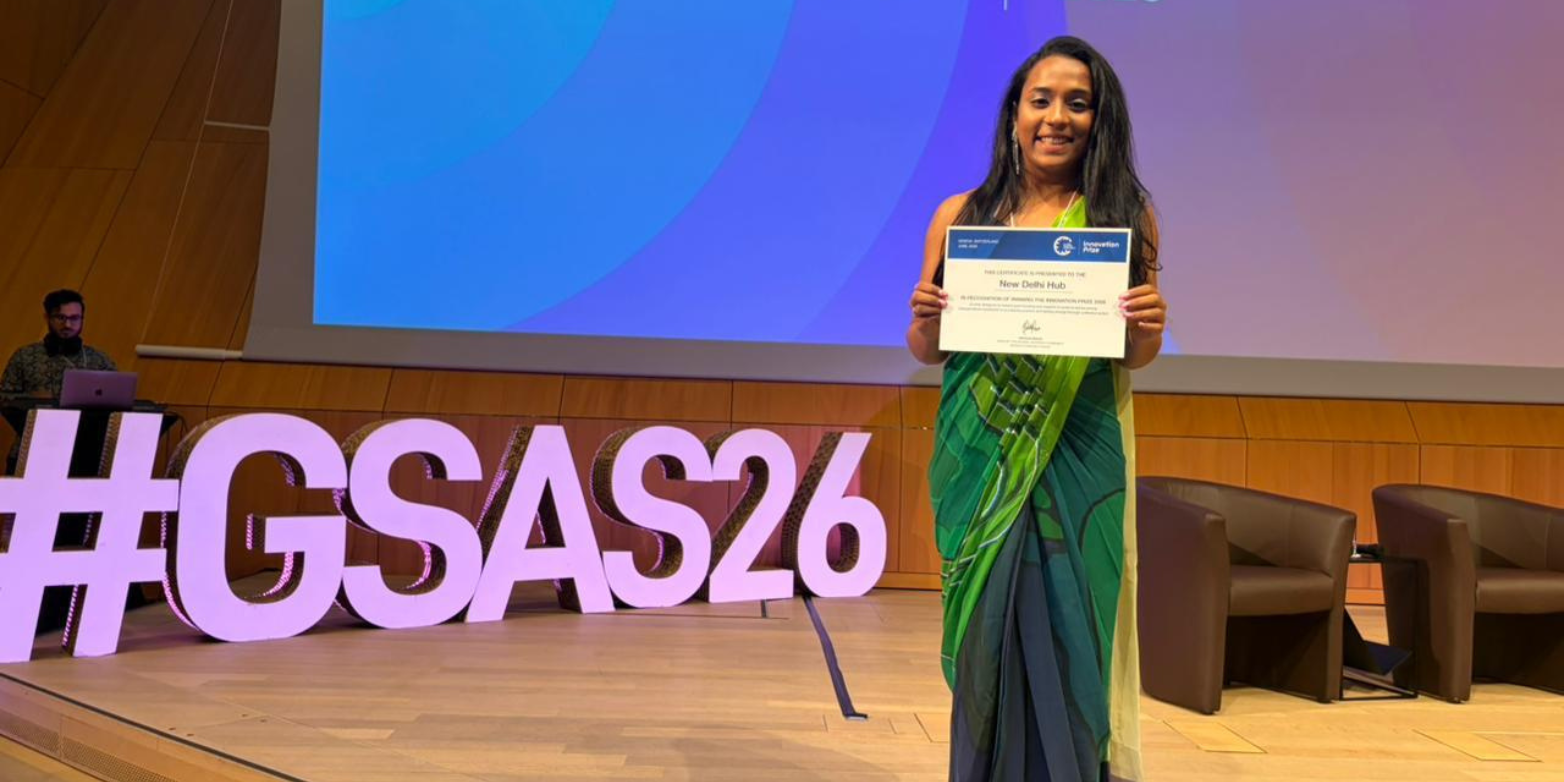
A locally developed clean air initiative led by Aditi Agarwal, Curator, Global Shapers New Delhi Hub and Project Lead, Accessible Clean Air Initiative, has won the Innovation Prize 2026 in Geneva, securing a 10,000 Swiss Franc grant to take its ₹1,450 air purifier into its next phase.
Clean Air has become the focus of a locally developed initiative from New Delhi that has now received global recognition. The Accessible Clean Air Initiative by the New Delhi Hub of the Global Shapers Community has won the Innovation Prize 2026 at the World Economic Forum’s Global Shapers Annual Summit in Geneva. The recognition comes with a 10,000 Swiss Franc grant that will support the project’s next phase, including the deployment of 410 additional air purifiers across Delhi.
Aditi Agarwal, Curator, Global Shapers New Delhi Hub and Project Lead, Accessible Clean Air Initiative, received the Innovation Prize in Geneva. The project was developed under the Hub’s Climate Emergency Action Project and focuses on making air purification more affordable for schools, shelter homes, low income households and other communities where conventional air purifiers may be financially inaccessible.
At the centre of the initiative is an air purifier that costs ₹1,450. According to the information shared by the team, commercial alternatives can cost between ₹6,000 and ₹15,000, making the locally developed unit nearly 90 percent less expensive. The purifier is lightweight and portable, consumes less than 24 watts of power and has a modular construction that allows individual components to be replaced when required.
Independent testing conducted at an NABL certified laboratory found that the purifier removes approximately 80 percent of PM2.5 and PM10 particles.
The simplicity of the finished product is particularly interesting when viewed against how the idea began.
In August 2025, the team carried out its first experiment using a household table fan, a rectangular HEPA filter and a few hair ties. Incense sticks were used to produce smoke, and the filter visibly trapped black particulate matter within minutes. The experiment gave the team enough reason to explore whether the basic concept could be developed into an affordable working product.
The months that followed involved studying the components used in commercial air purifiers and identifying which elements were essential to filtration. The team eventually replaced the rectangular filter with a cylindrical version, helping reduce the size and weight of the unit.
Its first casing was 3D printed, but the process proved too expensive for the scale the team wanted to achieve. It was subsequently redesigned using laser cut acrylic sheets, threaded rods and fasteners. The cutting layouts were also adjusted to reduce material waste and keep production costs under control.
The result was not simply a less expensive version of an existing appliance. The development process centred on keeping the purifier functional, repairable and practical for the communities it was intended to serve.
Another important part of the project emerged when the team began considering production at a larger scale. Building every unit manually within the project team would have limited its reach. Instead, the initiative partnered with a Women’s Self Help Group, where trained women now assemble the purifiers locally. This allows the project to connect its clean air objective with income opportunities at the community level.
During the pilot phase, 25 purifiers were deployed across community institutions and have benefited more than 250 people, including children, elderly residents and immunocompromised individuals.
The installations include Deepalaya School, Sheows Old Age Care Centre, Rojavanam Old Age Home and Ghaziabad District Hospital, along with orphanages, anganwadis, shelters and other community spaces. The initiative has also conducted awareness sessions on air pollution and indoor air quality and developed partnerships with VMTC, Genus Power, TVS Sundaram Textiles and other manufacturing and implementation partners.
The 10,000 Swiss Franc grant now gives the project an opportunity to move beyond its initial pilot.
The immediate plan is to deploy another 410 air purifiers across Delhi, with the project expecting to reach more than 2,000 people through schools, anganwadis, shelter homes, hospitals and community centres. The women led assembly model is also expected to expand through Self Help Groups as production increases.
Beyond Delhi, the team plans to develop a decentralised approach that could eventually be replicated by other Global Shapers Hubs across India. This would allow communities to manufacture, assemble and deploy the purifiers locally rather than depend entirely on production from one location.
The initiative is also considering a longer term model under which every five paid units would finance one purifier for an underserved community.
For Prittle Prattle News, the significance of the Accessible Clean Air Initiative lies not merely in producing an air purifier for ₹1,450. Its greater value is in the thinking behind that number.
The project began by asking what was genuinely necessary to make air purification work and then considered cost, repairability, energy consumption, local assembly and community access around that purpose. The independent testing provides an important technical reference, while the pilot deployment gives the project an initial measure of its practical application.
Winning the Innovation Prize 2026 gives a local experiment international visibility, but the accompanying 10,000 Swiss Franc grant may prove more consequential for what happens next. Moving from 25 deployed units to another 410 will test whether the same affordability and community based production model can work at a considerably larger level.
There is also something noteworthy about the project’s journey itself. An experiment assembled with a table fan, a HEPA filter and hair ties has progressed to an internationally recognised initiative with independent laboratory testing, community deployment and a defined expansion plan.
The next phase will determine how far that idea can travel. For now, a clean air solution developed locally in New Delhi has already found recognition on a global stage.
At Prittle Prattle News, featuring you virtuously, we celebrate the commitment and innovation. Led by Editor-in-Chief Smruti Bhalerao, our platform is dedicated to sharing impactful stories that inspire change and create awareness. Follow us on LinkedIn, Instagram, and YouTube for more stories that matter.
About Prittle Prattle News
Prittle Prattle News is a digital news publication covering business, technology, healthcare, education, lifestyle, public affairs and other developments from India and around the world. Led by Editor-in-Chief Smruti Bhalerao, we publish timely news, industry updates and feature stories for a broad readership.





I just like the helpful information you provide in your articles
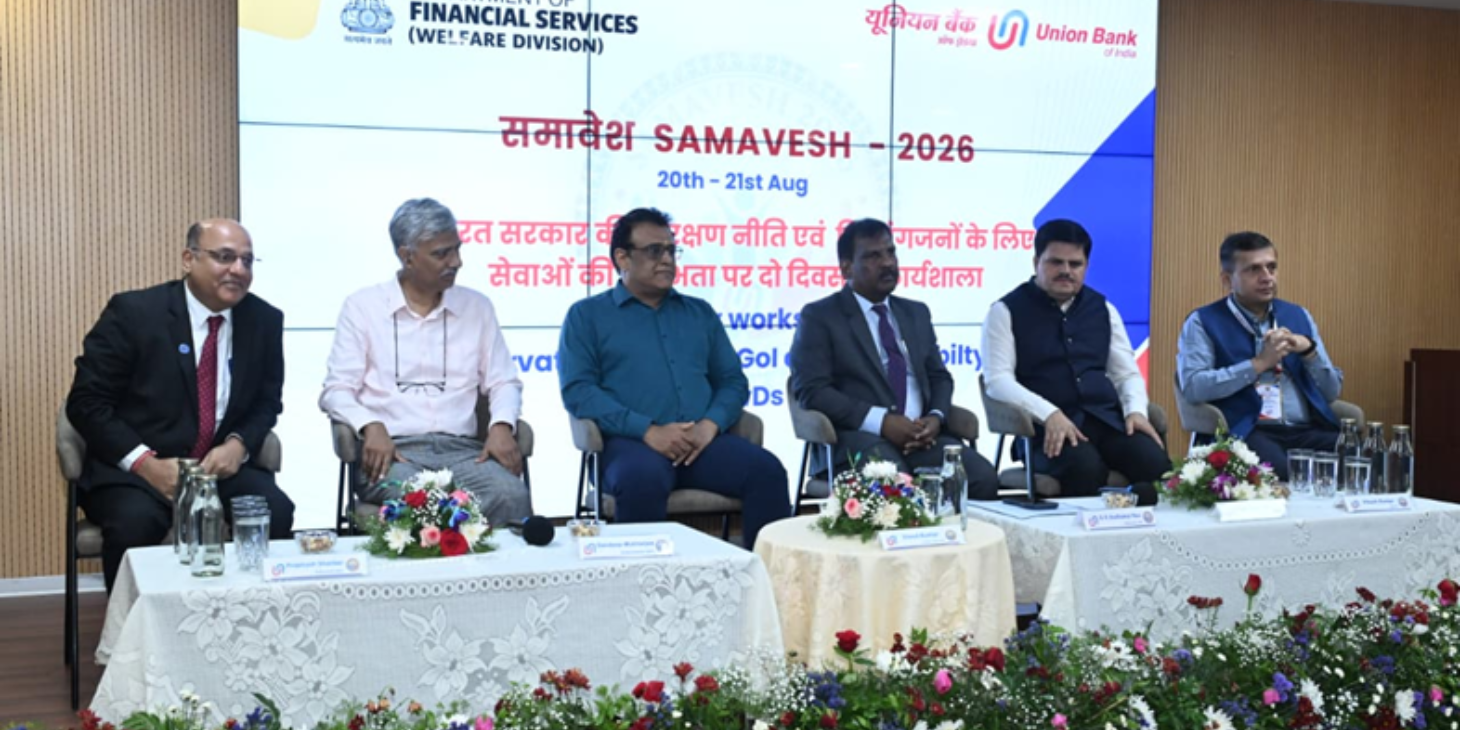
[…] 20 and 21, 2026, the workshop was hosted at the Union Bank Knowledge Centre and focused on building institutional capacity and improving operational understanding of reservation policies and accessibility […]