





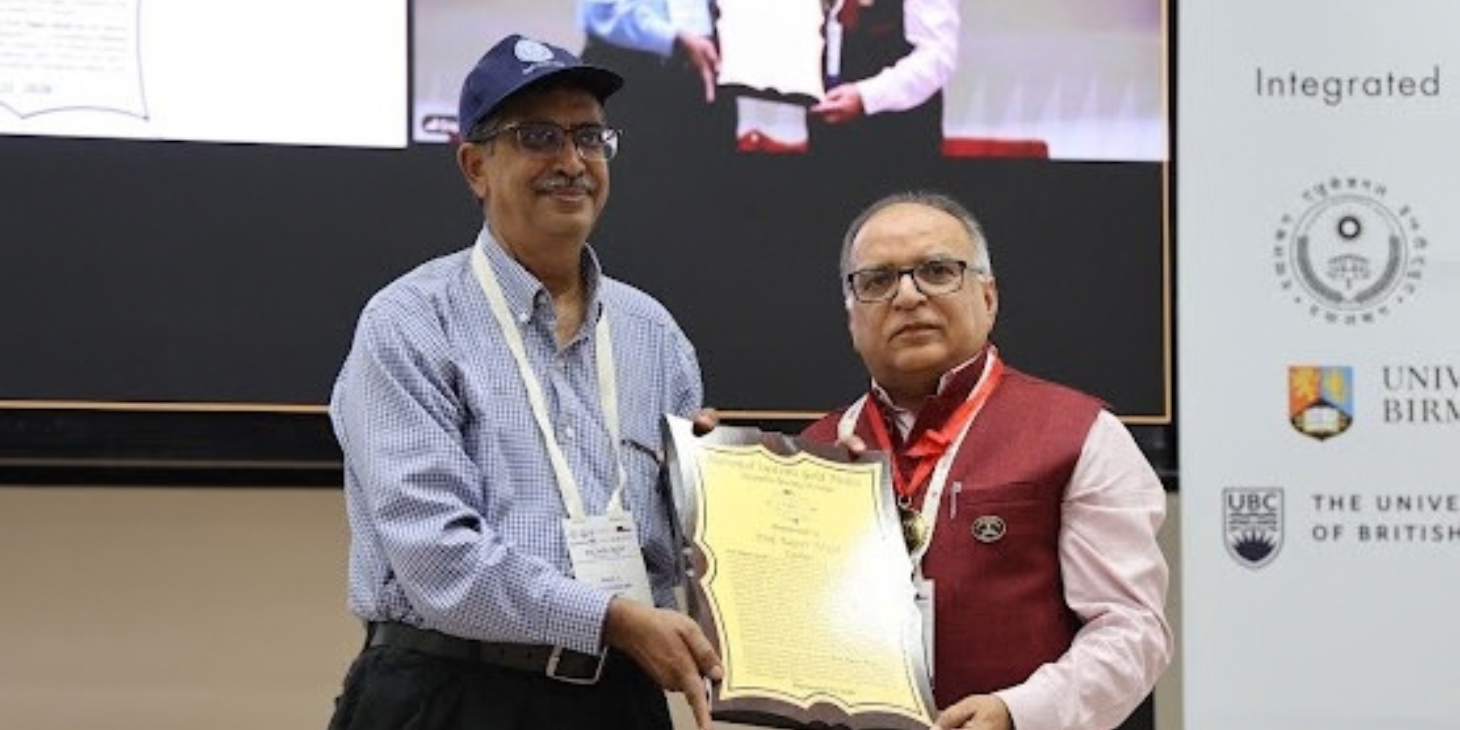

Selected from 450 teams comprising 2,250 students, nine finalists developed solutions spanning household financial wellness, gig worker income management and consent based financial services using Digital Public Infrastructure.
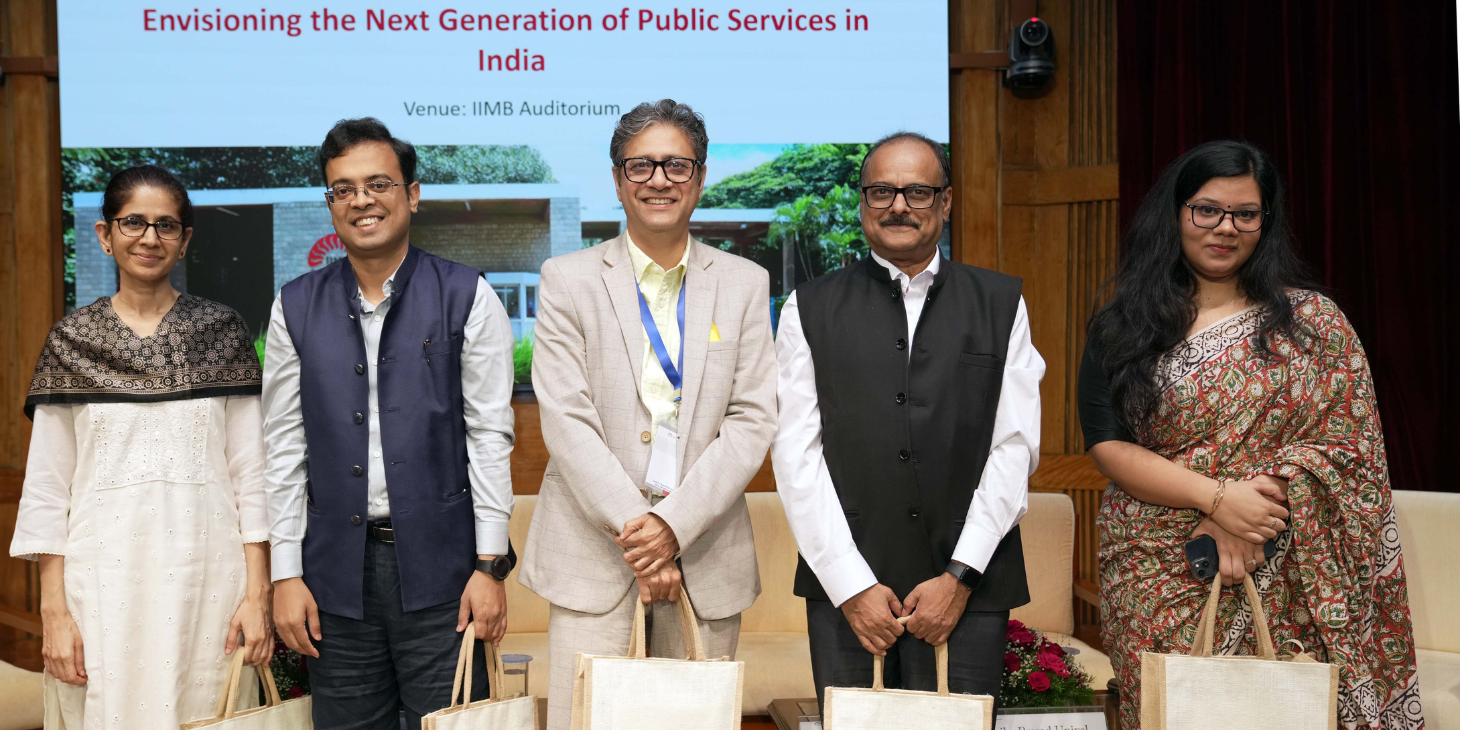
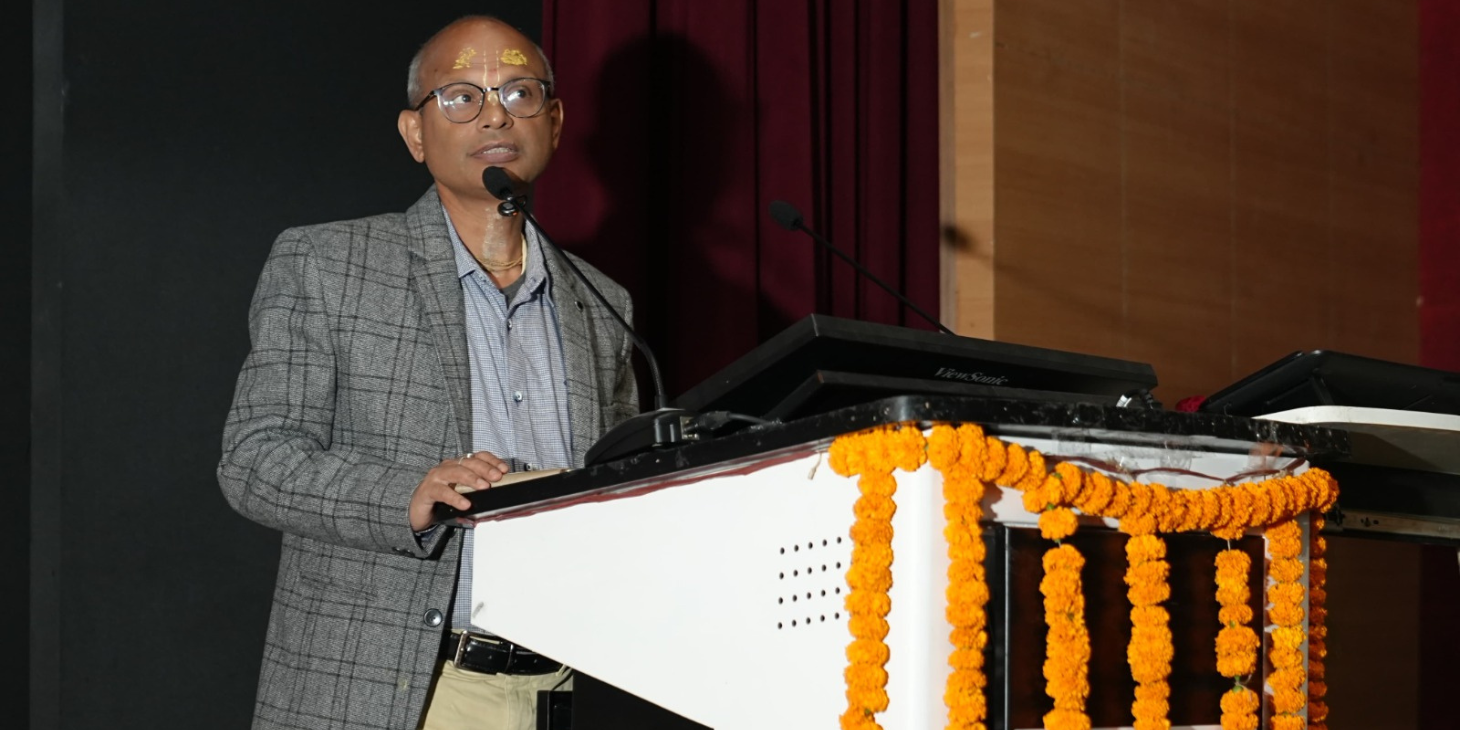
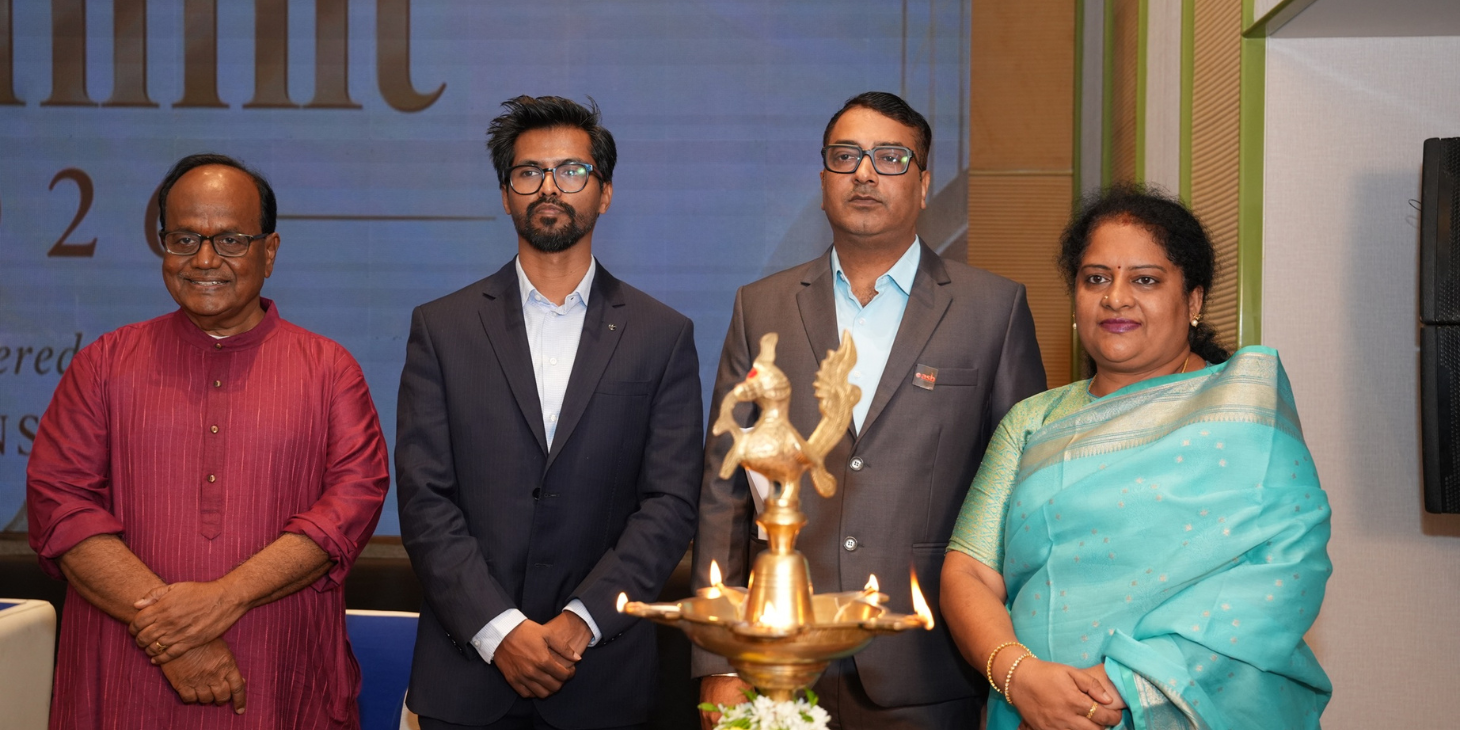
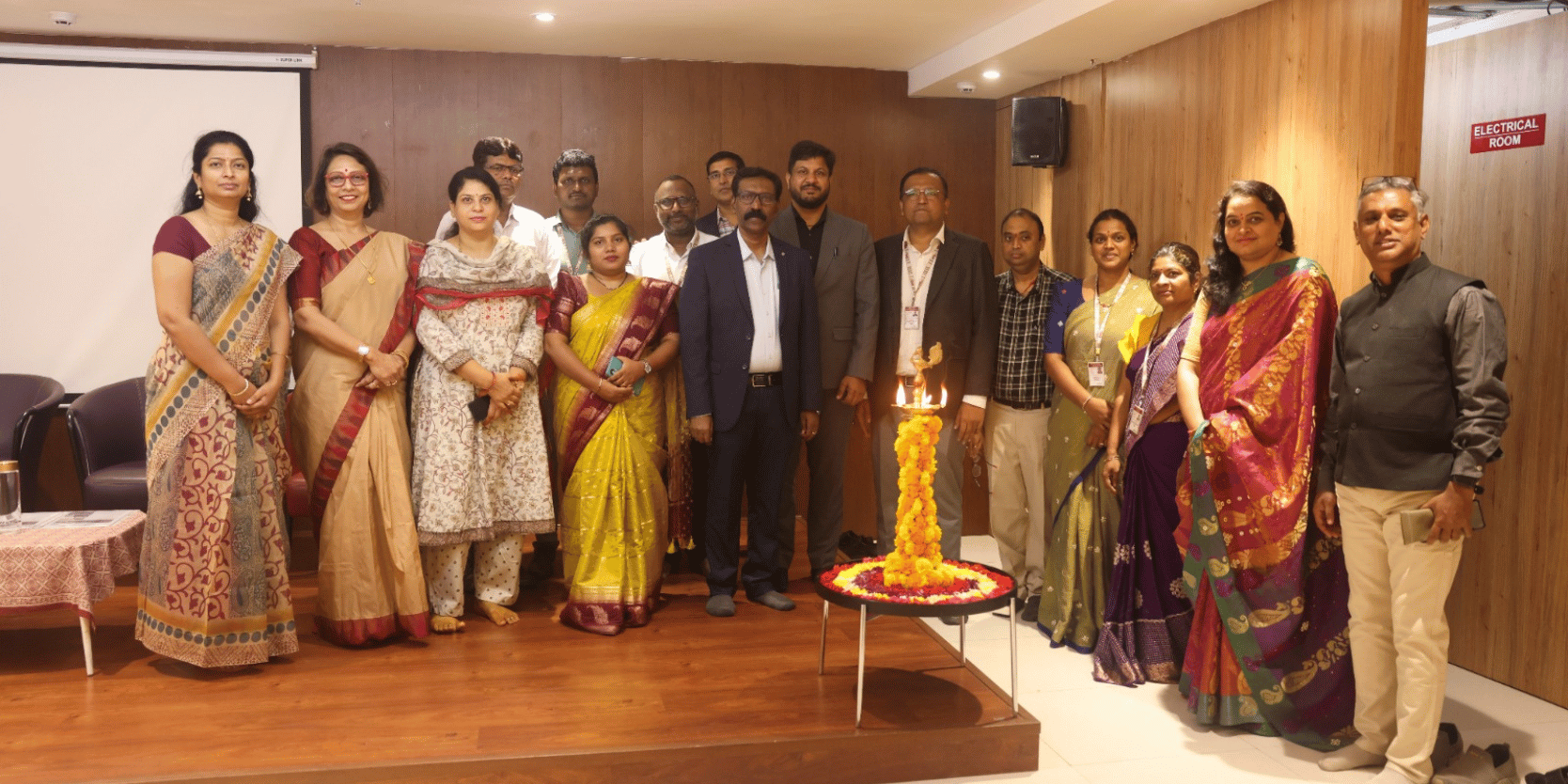
Prof. R Srinivasan, Chairperson, Center for Digital Public Goods and faculty of Strategy at IIM Bangalore, joined jury members Prof. Deepak Chandrashekar, Strategy area, IIM Bangalore, Srikanth Rajagopalan, CEO, Anumati by Perfios AA, Sundar Natarajan, Head, Strategy, Communications & Institutional Relations, Digi Yatra Foundation, and Ashish Mittal, DigiGo, as student teams tackled technology, policy and governance challenges.
Nine student teams reached the national finals of the National Student Case Competition 2026 at IIM Bangalore after a competition that drew 450 teams comprising 2,250 students from across India.
Hosted by the Center for Digital Public Goods, IIM Bangalore, with support from Perfios and Anumati Account Aggregator, the competition asked students from engineering, technology, management, public policy and finance backgrounds to examine how Digital Public Infrastructure can address practical challenges while accounting for privacy, consent, regulation, accessibility and public value.
The finalists competed across three tracks covering Technology & Design, Policy & Regulation, and Governance & Ecosystem. The tracks received 146, 127 and 177 submissions respectively.
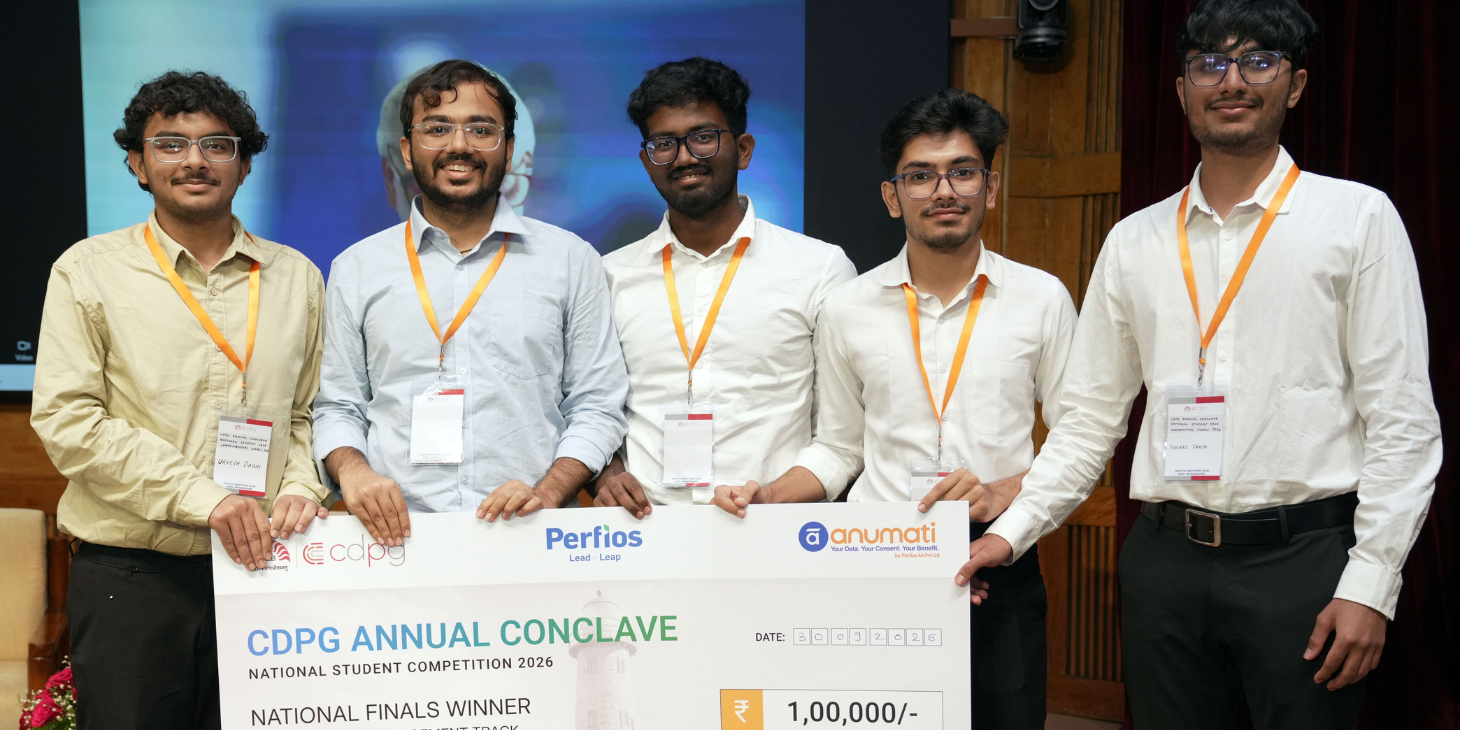
The finalist teams presented their solutions at the CDPG Annual Conclave 2026, where one winner was selected from each track. Each winning team received ₹1 lakh.
Team Champagne Papi from IIM Bangalore’s PGP programme won the Technology & Design track with SAHAY, a conversational financial wellness service using WhatsApp to help households anticipate and prepare for major expenses over the following three months.
In the Policy & Regulation track, Team Pungibunch from IIM Bangalore’s BBA (DBE) programme won with Anumati. The solution combines consented financial data with a structured method for identifying risks and prioritising financial guidance.
Team Case Crackers from Dhirubhai Ambani University won the Governance & Ecosystem track with Sambhal, a consent first financial timing service built on India’s Account Aggregator infrastructure to help households make more timely financial decisions.
Team Nexus from IIT Jodhpur received the Jury’s Choice Award and a special prize of ₹50,000 for Paarivar CFO in the Technology & Design track.
The nine finalists included two teams from Thapar Institute of Engineering and Technology and one from Dhirubhai Ambani University in Governance & Ecosystem. IIM Bangalore’s BBA (DBE), Rajiv Gandhi Institute of Petroleum Technology and IIM Sambalpur competed in Policy & Regulation, while IIT Jodhpur, IIM Bangalore’s PGP and Nirma University were represented in Technology & Design.
Prof. R Srinivasan, Chairperson, Center for Digital Public Goods and faculty of Strategy at IIM Bangalore, said, “With the first edition of the CDPG National Student Case Competition, we wanted to introduce students to the many dimensions of DPI and, in the process, build a deeper sense of curiosity and pride in what India has created. It was important to us that students encounter DPI not only as a technology story, but as a space where policy, governance, technology and design come together and perhaps see nation-building as a career in which they can play a role. That thinking lent itself to the three tracks of the competition. We thank our partners for helping us bring this vision to life and for encouraging structured thinking through the case study method.”
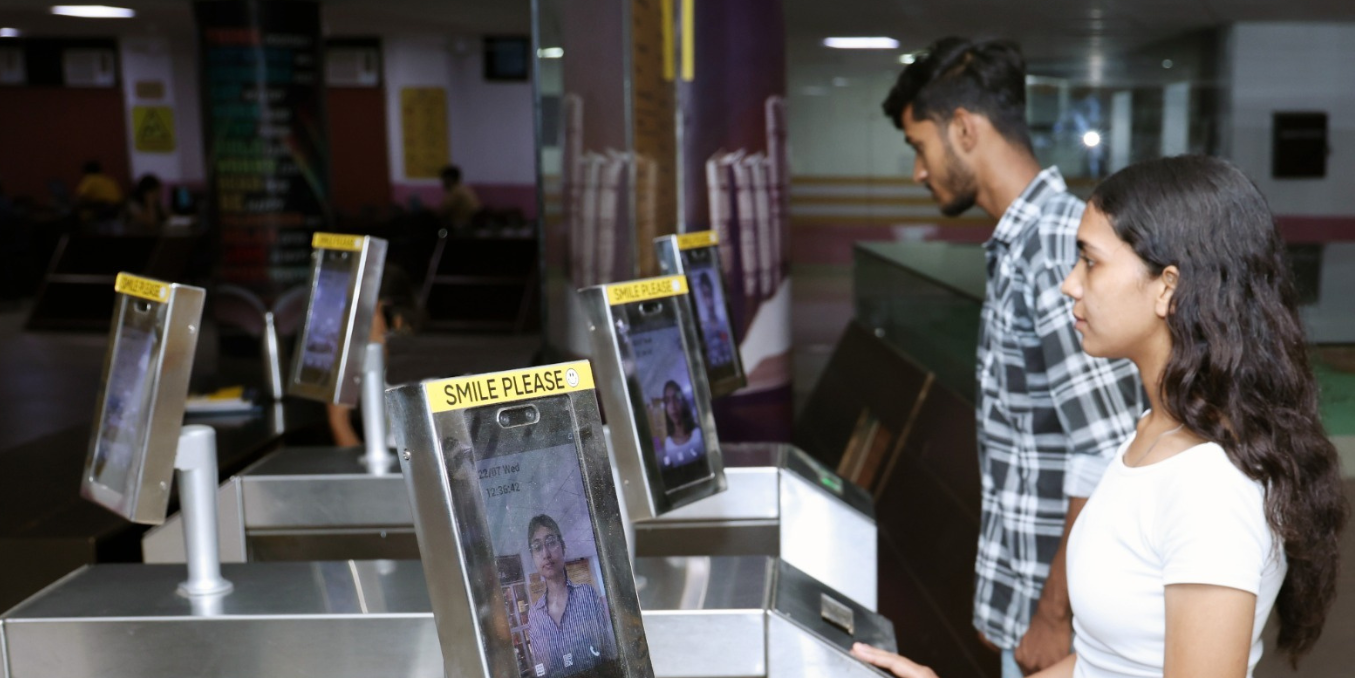
The competition was conducted in two stages. In Stage I, teams examined the implications of extending Digi Yatra beyond its original context. Their work considered privacy, consent, purpose limitation, interoperability, governance, commercial use and public value.
Stage II moved from analysing a DPI problem to building and demonstrating a solution. Students were asked to develop a financial wellness service for an aspiring middle class household using the Perfios Anumati sandbox and consented financial information.
Teams had to demonstrate a working prototype or service flow, use sandbox APIs and representative data, propose financial interventions and account for consent, privacy, data protection, accessibility and regulatory requirements. Scalability and business viability were also considered.
Trust and privacy featured prominently in participants’ motivations. Approximately 44% of teams referenced trust and 43% referenced privacy when describing what attracted them to the competition. Consent, citizen interests, convenience, innovation, interoperability, security and ecosystem management were among the other recurring subjects.
Several finalist solutions addressed specific financial challenges. Team Catalyst from Nirma University developed Nirnay, a decision engine designed to help households identify and prioritise important financial decisions over a three month period through a bank led distribution model.
Team Dominion from Thapar Institute of Engineering and Technology developed Mirror, which uses consented Account Aggregator data to analyse household transactions, identify patterns and missed payments, and surface financial questions.
Team DIGI Ops from IIM Sambalpur created Income Saathi for gig workers. The platform consolidates income from multiple platforms into a financial ledger intended to help users anticipate expenses, build a safety fund and manage irregular earnings.
The Stage II jury comprised Prof. Deepak Chandrashekar, faculty of the Strategy area at IIM Bangalore, Srikanth Rajagopalan, CEO, Anumati by Perfios AA, Sundar Natarajan, Head, Strategy, Communications & Institutional Relations, Digi Yatra Foundation, and Ashish Mittal, DigiGo.
Prof. Deepak Chandrashekar said, “What stood out to me was that we saw students from management institutes making it through in the Technology & Design track, and engineering students emerging in Policy & Regulation and Governance & Ecosystem. It was your curiosity about the problem that drove the work”.
He added, “At the final stage, what mattered was whether you had identified a compelling problem, built a credible business case around it, and developed a solution that created value. We also looked at how effectively you integrated APIs and brought different stakeholders together to strengthen that value proposition”.
Srikanth Rajagopalan, CEO, Anumati by Perfios AA, said, “Across the teams, what came through consistently was the amount of hard work and depth that went into the ideas and presentations. It takes a great deal of rigour to build a proposition and then tell that story convincingly. I hope this room produces at least three startups. You now know how to build a product and how to get started, whether by integrating APIs through increasingly accessible tools or using AI to accelerate development. The cost of failure has, in many ways, come down drastically, and that creates a real opportunity to take these ideas beyond the competition”.
Sundar Natarajan, Head, Strategy, Communications and Institutional Relations, Digi Yatra Foundation, said, “As DPI continues to evolve, technology, trust, responsibility and purpose must remain central to how we design and build digital ecosystems. Digi Yatra’s experience in enabling seamless airport access offers a valuable context for exploring these questions, particularly as conversations around digital identity and its potential applications evolve. Our engagement with IIM Bangalore’s CDPG Annual Conclave provides an opportunity to encourage an informed dialogue on the possibilities and considerations involved in building trusted digital ecosystems”.
Ashish Mittal of DigiGo commended the preparation behind the teams’ propositions and noted that more participants could consider business customers as a route to market for DPI enabled solutions.
The judging process assessed the use of DPI and Account Aggregator data and APIs, the customer problem and value proposition, financial interventions, privacy and regulatory design, economic viability, technical feasibility, scalability and the quality of the final demonstration.
Students were also required to consider how users would provide consent for data access, understand recommendations and retain control through mechanisms including revocation and correction.
The inaugural competition concluded with students examining Digital Public Infrastructure not only from a technology perspective but through the connected questions of governance, policy, commercial viability, privacy and citizen interests.
At Prittle Prattle News, featuring you virtuously, we celebrate the commitment and innovation. Led by Editor-in-Chief Smruti Bhalerao, our platform is dedicated to sharing impactful stories that inspire change and create awareness. Follow us on LinkedIn, Instagram, and YouTube for more stories that matter.
About Prittle Prattle News
Prittle Prattle News is a digital news publication covering business, technology, healthcare, education, lifestyle, public affairs and other developments from India and around the world. Led by Editor-in-Chief Smruti Bhalerao, we publish timely news, industry updates and feature stories for a broad readership.










Add Comment