





IIM Bangalore has become India's first educational institution to receive Platinum certification under the Indian Green Building Council's Green Campus Rating System Version 1.0. The recognition covers the institute's environmental initiatives, including water conservation, renewable energy, waste management and sustainable mobility.
The institute becomes India’s first educational institution to receive Platinum status under IGBC Green Campus Rating System Version 1.0, supported by wastewater recycling, 350 kWp solar capacity and sustainable campus operations.
Green Campus Milestone for IIM Bangalore as Institute Earns IGBC Platinum Certification
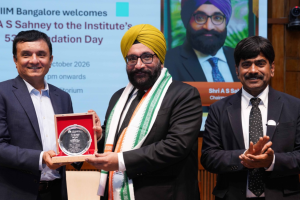
Bengaluru, November 16, 2026: Indian Institute of Management Bangalore (IIMB) has received Platinum certification under the Indian Green Building Council’s (IGBC) Green Campus Rating System, Version 1.0, becoming the first educational institution in India to achieve this distinction.
The certification recognises the institute’s approach to environmental management across energy efficiency, water conservation, renewable energy, waste management, resource utilisation and occupant wellbeing.
With this recognition, IIM Bangalore joins five facilities in India that have received Platinum certification under this version of the rating system.
The other certified facilities are Odisha Lok Bhavan, formerly Raj Bhavan in Bhubaneswar; SP Infocity in Pune; the IndianOil Corporation Limited campus in Faridabad; and Schindler’s campus in Pune.
IIM Bangalore is the first educational institution among these facilities to receive the certification.
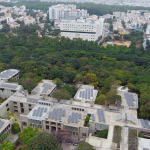
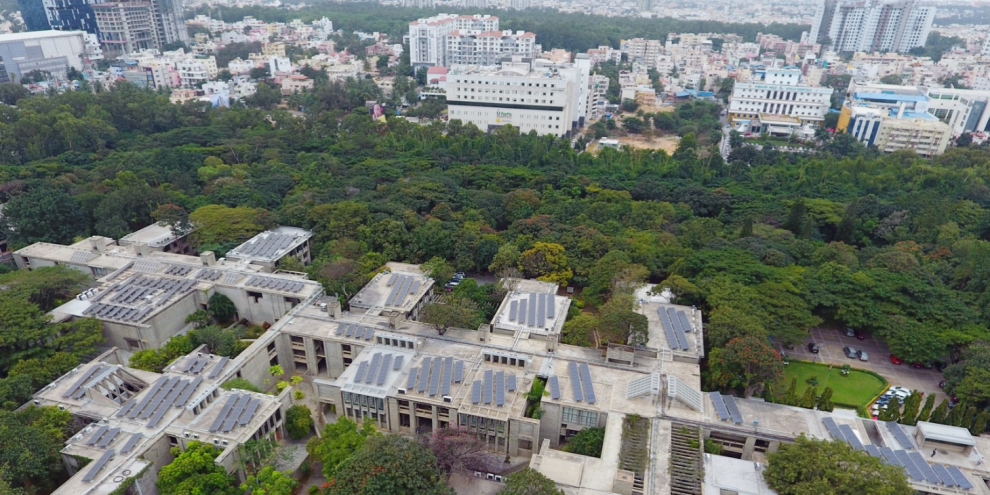
The campus, designed by architect and Pritzker Prize laureate Dr. B.V. Doshi, incorporates architectural features suited to Bengaluru’s climate.
Its interconnected courtyards, shaded corridors and use of natural daylight and ventilation help reduce dependence on artificial lighting and cooling.
The campus also maintains extensive green spaces that contribute to its ecological environment and biodiversity.
Water conservation forms a major part of the institute’s environmental management activities.
IIMB operates a sewage treatment plant with a capacity of 500 kilolitres per day (KLD), which treats 100% of the wastewater generated on campus.
The treated water is reused for flushing and landscaping, reducing the need for freshwater in these activities.
The campus has also developed rainwater harvesting, storage and groundwater recharge systems.
According to the institute, these systems have capacities exceeding estimated rainfall runoff, supporting water collection and groundwater replenishment.
Continuous monitoring helps maintain wastewater treatment efficiency, while water submetering systems track consumption across campus facilities.
These measures allow the institute to assess water usage and identify opportunities for further conservation.
Renewable energy is another component of IIM Bangalore’s sustainability initiatives.
The institute currently has rooftop solar installations with a combined capacity of 350 kilowatt peak (kWp).
An additional 150 kWp of solar capacity has been proposed, while the institute is also examining options for sourcing renewable electricity from outside the campus.
These plans are intended to increase the proportion of renewable energy used in campus operations.
IIM Bangalore has also introduced electric buggies and an electric bus for internal mobility.
Fast charging provisions support the operation of these vehicles.
Waste management practices include segregation at source, treatment of organic waste within the campus and recycling of dry waste through authorised third party vendors.
The institute has incorporated environmental considerations into procurement decisions, including the use of recycled chlorine free paper, housekeeping chemicals selected for environmental responsibility, organic fertilisers, pest control products and biodegradable waste liners.
Indoor air quality monitoring in classrooms forms part of its efforts to maintain suitable learning and working environments.
Alongside these operational measures, IIM Bangalore has undertaken greenhouse gas assessments and sustainability studies.
These assessments are intended to identify immediate improvements and longer term measures that could contribute to the institute’s Net Zero goals.
The announcement does not specify a target year for achieving Net Zero emissions.
The IGBC Platinum certification recognises the combined contribution of the institute’s architectural design, infrastructure, environmental monitoring and campus management practices.
For IIM Bangalore, the distinction marks progress in managing the environmental impact of a large educational campus while continuing work on renewable energy, water conservation and resource efficiency.
At Prittle Prattle News, featuring you virtuously, we celebrate the commitment and innovation. Led by Editor-in-Chief Smruti Bhalerao, our platform is dedicated to sharing impactful stories that inspire change and create awareness. Follow us on LinkedIn, Instagram, and YouTube for more stories that matter.
About Prittle Prattle News
Prittle Prattle News is a digital news publication covering business, technology, healthcare, education, lifestyle, public affairs and other developments from India and around the world. Led by Editor-in-Chief Smruti Bhalerao, we publish timely news, industry updates and feature stories for a broad readership.






Add Comment