

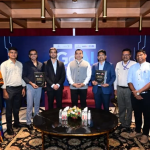
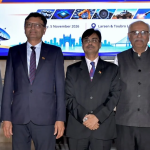

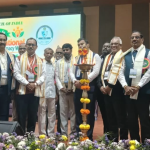
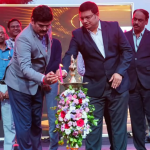


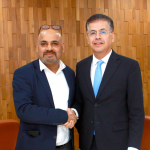


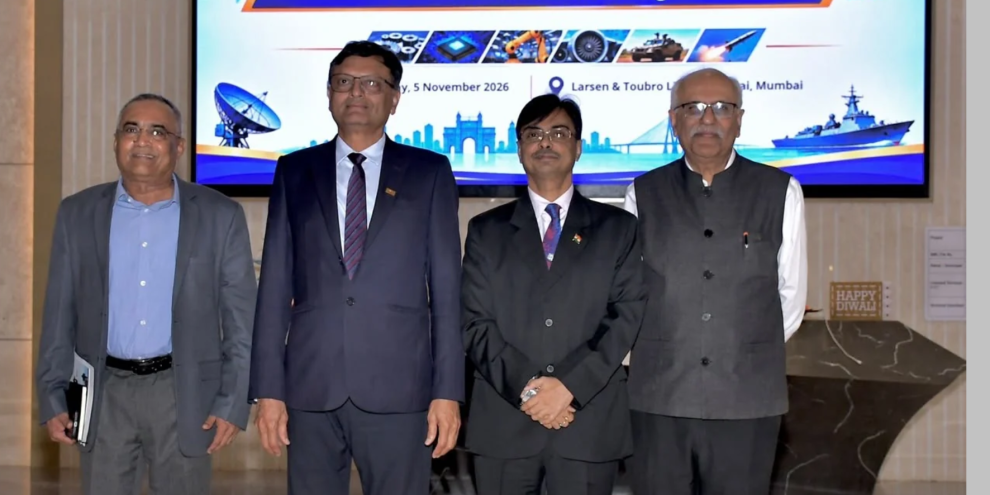
Former Chief of the Army Staff General Manoj Pande called for India to move beyond defence assembly and technology transfer towards indigenous intellectual property ownership. The ASSOCHAM Maharashtra meeting also examined industry financing, skilled manpower, testing infrastructure and a proposed roadmap for collective action.
At the Maharashtra Aerospace and Defence Council’s first stakeholder meeting, industry leaders discussed domestic defence production worth ₹1,80,000 crore, technology development, financing challenges and a proposed testing facility, with a council action plan targeted for March 2027.
India Must Prioritise Defence Technology Ownership, Says General Manoj Pande at ASSOCHAM Meeting
Maharashtra, November 6, 2026: General Manoj Pande, PVSM, AVSM, VSM, ADC (Retd.), Former Chief of the Army Staff, has called for a shift in India’s defence manufacturing approach from domestic assembly towards ownership of indigenous technologies, intellectual property and critical subsystems.
Speaking at the first stakeholder meeting of the ASSOCHAM Maharashtra Aerospace and Defence Council, General Pande emphasised that local manufacturing alone would not be sufficient to achieve greater technological independence.
“The focus is clearly shifting from Make in India to Owned by India,” he said.
Elaborating on the need for domestic technological capabilities, he added, “People have realised that it is no longer enough to get a transfer of technology (ToT) from outside and simply assemble things here. You need to have your own IP in technologies and subsystems. I think that is where the government wants to move.”
The meeting, organised by the ASSOCHAM Maharashtra State Council, brought together defence industry representatives, business leaders and other stakeholders to discuss manufacturing opportunities, technological development and challenges facing the aerospace and defence sector.
Participants examined how Maharashtra could expand its role in defence production through industrial cooperation, indigenous design and specialised manufacturing capabilities.
Arun T Ramchandrani, Senior Vice President and Head, L&T Precision Engineering & Systems, and President, Society of Indian Defence Manufacturers (SIDM), referred to the scale of domestic defence production.
“The scale of the domestic industry today, the output of the industry, is about ₹1,80,000 crore in the last financial year. We are seeing regular growth and a large thrust on self-reliance and domestic product development, so there is huge evolution,” he said.
Milind Hardikar, Chairman, ASSOCHAM Maharashtra State Council, highlighted the relationship between national security, industrial competitiveness and technological capabilities.
He said, “Today, this industry sits at the intersection of national security, strategic autonomy, advanced technology, and industrial competitiveness. The future will be shaped not just by manufacturing capacities, but it will be increasingly dependent on ability to design a product, develop, manufacture and continuously upgrade advanced technologies and systems.”
Addressing the meeting virtually, Saurabh Sanyal, Secretary General, ASSOCHAM, called for greater emphasis on indigenous design, technology development and exports.
“Our focus therefore must now be to move beyond import substitution towards indigenous design, technology development, manufacturing, innovation and exports. Maharashtra is particularly well positioned to contribute to this national ambition, given its strong industrial base, engineering capabilities, aerospace and automotive ecosystem, MSMEs, research institutions and skilled workforce,” he said.
Sanjay Chakraborty, Chairman, Aerospace and Defence, ASSOCHAM Maharashtra State Council, and Vice President and Head, Corporate Center, L&T Precision Engineering and Systems, spoke about the importance of cooperation among industry participants.
He said, “The strength of an ecosystem lies not merely in the capabilities of its individual constituents, but in how effectively they connect, collaborate and complement one another. Our aim is to build a defence and aerospace ecosystem in Maharashtra that is greater than the sum of its parts.”
The discussions identified opportunities in specialised alloys, submarine components, stealth and signature management technologies, aerospace engineering, maintenance, repair and overhaul services, advanced manufacturing and technologies with both civilian and defence applications.
Participants also examined obstacles affecting companies operating in the sector.
These included high production costs, restrictions on design modifications, delayed payments, working capital pressures and limited access to institutional finance.
Industry representatives called for closer interaction with the armed forces and government departments to understand operational requirements, support technology adoption and improve procurement responsiveness.
The availability and retention of skilled employees was another concern. Participants discussed structured training initiatives and greater industry involvement in preparing workers for specialised technical roles.
The inclusion of banks and financial institutions in future council discussions was also proposed to address funding and working capital requirements.
A dedicated testing and validation facility in Maharashtra emerged as one of the principal proposals.
Such a facility would provide an environment for evaluating defence and aerospace technologies. Participants discussed moving the proposal forward through coordinated engagement with industry and relevant institutions.
The meeting also considered a structured approach involving dedicated working groups, clearly assigned responsibilities and initiatives led by council members.
Under the proposed roadmap, the council would identify priority areas, appoint individuals to lead specific initiatives and engage government departments and institutional partners.
The plan envisages consolidating industry priorities over the coming months, finalising a member owned charter and working group structures by March 2027, and beginning implementation in April 2027.
These remain proposed milestones rather than completed initiatives.
The meeting concluded with a vote of thanks by Perminder Jeet Kaur, Head, States and Union Territories, ASSOCHAM.
She acknowledged the contributions of the speakers and participants and emphasised closer engagement between industry, government and the armed forces.
Kaur also suggested examining lessons from IIT Kanpur’s proposed technology sandbox for drones and aerospace while considering a comparable facility in Maharashtra.
The meeting concluded with an emphasis on translating industry discussions into coordinated initiatives addressing technology ownership, manufacturing capabilities, financing and testing infrastructure.
At Prittle Prattle News, featuring you virtuously, we celebrate the commitment and innovation. Led by Editor-in-Chief Smruti Bhalerao, our platform is dedicated to sharing impactful stories that inspire change and create awareness. Follow us on LinkedIn, Instagram, and YouTube for more stories that matter.
About Prittle Prattle News
Prittle Prattle News is a digital news publication covering business, technology, healthcare, education, lifestyle, public affairs and other developments from India and around the world. Led by Editor-in-Chief Smruti Bhalerao, we publish timely news, industry updates and feature stories for a broad readership.


















Add Comment