






As residential buildings across Indian cities grow older, ageing elevators are presenting maintenance, safety and operational challenges. Navin Rajagopalan of City Lifts India Limited discusses how upgrading existing systems can improve performance without requiring complete elevator replacement.
Navin Rajagopalan, Director, City Lifts India Limited, explains why elevators installed 15 to 25 years ago may require modernisation to improve passenger safety, reliability and energy efficiency in older buildings.
Why Older Residential Buildings Need to Prioritise Elevator Modernisation By Mr. Navin Rajagopalan, Director, City Lifts India Limited
As Indian cities continue to expand vertically, maintaining the infrastructure inside older residential buildings is becoming an important concern. Among the systems requiring attention are elevators that have served housing societies and commercial properties for decades.
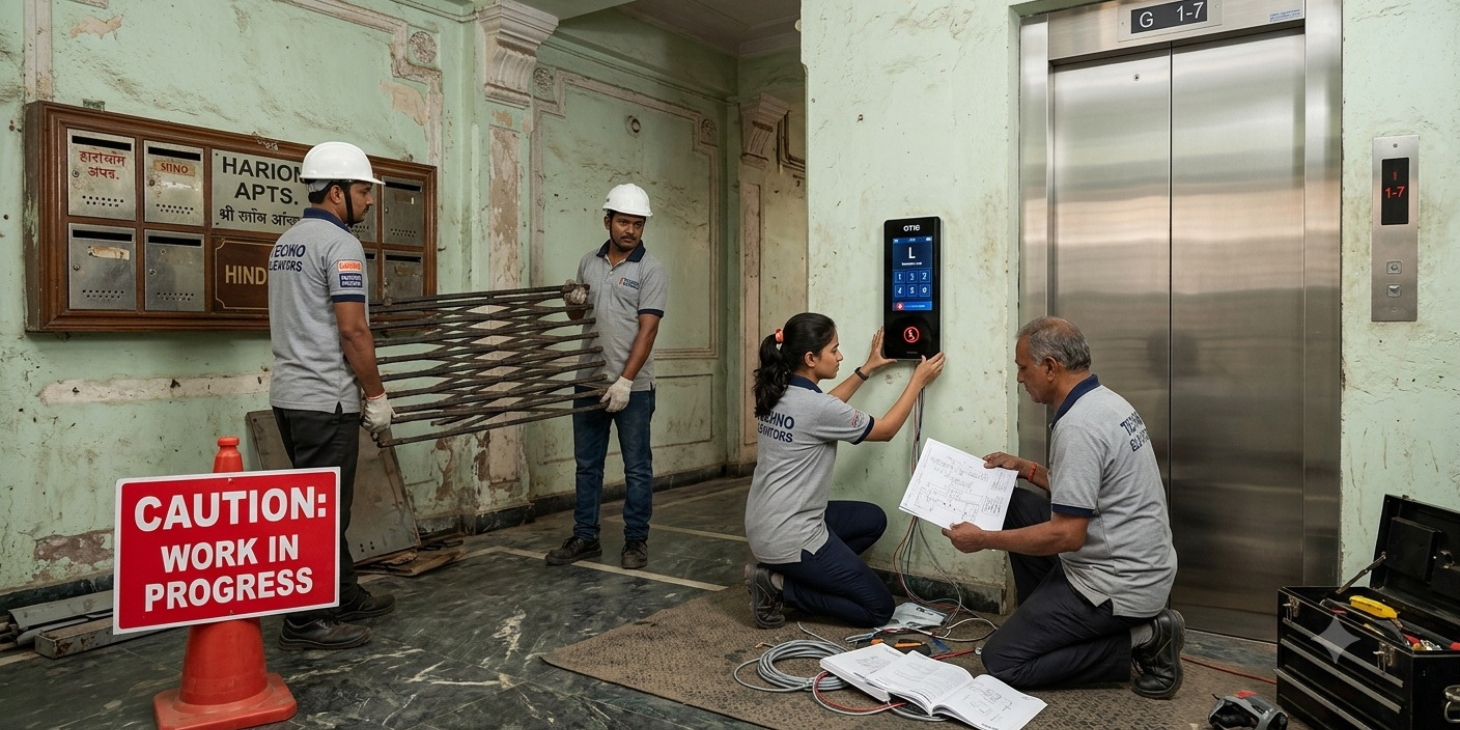
Many buildings in Mumbai, Pune, Delhi and Kolkata continue to use elevators installed approximately 15 to 25 years ago. Although these systems may remain operational, their performance can deteriorate with age, leading to breakdowns, longer waiting times, uncomfortable journeys and increased maintenance requirements.
In residential buildings with frequent elevator use, even short periods of downtime can affect daily routines. The inconvenience can be particularly significant for elderly residents, people with mobility limitations and families living on higher floors.
Safety is another reason building owners and housing societies need to assess older elevator installations.
Elevator components experience wear through repeated operation. Controllers, motors, door mechanisms and electrical wiring can become less dependable over time, particularly when maintenance or component replacement is delayed.
Deterioration in these systems may increase the likelihood of operational faults, making periodic inspections and timely repairs essential.
Discussions concerning elevator safety regulations in Maharashtra have also drawn attention to the importance of inspection practices and maintenance standards.
For residential societies, the central question is whether existing equipment can continue to meet operational and safety requirements or whether significant upgrades are necessary.
Elevator modernisation offers an alternative to replacing an entire installation.
Depending on the condition of the existing system, modernisation may involve upgrading controllers, motors, door operators, electrical components and other essential equipment while retaining suitable parts of the original installation.
Such improvements can address recurring faults, improve ride comfort and support more reliable elevator operation.
Modern equipment may also incorporate updated safety features and accessibility provisions, helping buildings respond to changing operational requirements.
Energy efficiency is another consideration.
Older elevators may rely on electrical and mechanical systems that consume more power than newer alternatives. Replacing selected components with more efficient technologies can help reduce electricity consumption, depending on the equipment installed and how the elevator is used.
Modern control systems can also improve elevator movement, door operation and passenger handling.
In buildings with substantial daily traffic, these changes may contribute to shorter waiting periods, smoother journeys and more predictable performance.
The financial implications are important for housing societies, which often need to balance infrastructure improvements against maintenance budgets and contributions from residents.
Complete elevator replacement can involve substantial expenditure and prolonged installation work.
A phased modernisation programme may allow a building to address its most urgent technical requirements first, while scheduling additional improvements over time.
This approach can reduce the need for immediate full replacement, although its suitability depends on the condition of the existing equipment, technical compatibility and applicable safety requirements.
Before deciding on an upgrade, housing societies should obtain a detailed technical assessment of their elevators.
The assessment should consider equipment age, maintenance history, frequency of breakdowns, availability of replacement parts, energy consumption and compliance with relevant safety standards.
Buildings should also evaluate how proposed work will affect elevator availability during installation.
For commercial property owners and residential associations, modernisation is not solely a question of replacing old machinery. It is also an opportunity to improve accessibility, operational continuity and the long term usability of the property.
Reliable elevators are particularly important in densely occupied buildings where residents and visitors depend on vertical transport throughout the day.
As more Indian residential properties reach the stage where major equipment upgrades become necessary, elevator modernisation is likely to receive greater attention from housing societies, property managers and building owners.
The priority should remain a careful assessment of existing systems, followed by technically appropriate improvements that address safety, reliability and operating efficiency.
With proper planning, buildings may be able to extend the useful life of suitable elevator installations while providing a more dependable experience for residents.
At Prittle Prattle News, featuring you virtuously, we celebrate the commitment and innovation. Led by Editor-in-Chief Smruti Bhalerao, our platform is dedicated to sharing impactful stories that inspire change and create awareness. Follow us on LinkedIn, Instagram, and YouTube for more stories that matter.
About Prittle Prattle News
Prittle Prattle News is a digital news publication covering business, technology, healthcare, education, lifestyle, public affairs and other developments from India and around the world. Led by Editor-in-Chief Smruti Bhalerao, we publish timely news, industry updates and feature stories for a broad readership.






















Add Comment