









Aspire Circle and Aspire Impact publication brings together 19 ESG, sustainability and business leaders to assess packaging, water, sourcing, energy and growth opportunities.
Aspire Circle and Aspire Impact have introduced a new ESG performance model for India’s fast moving consumer goods sector, designed to assess environmental, social and governance risks separately from opportunities.
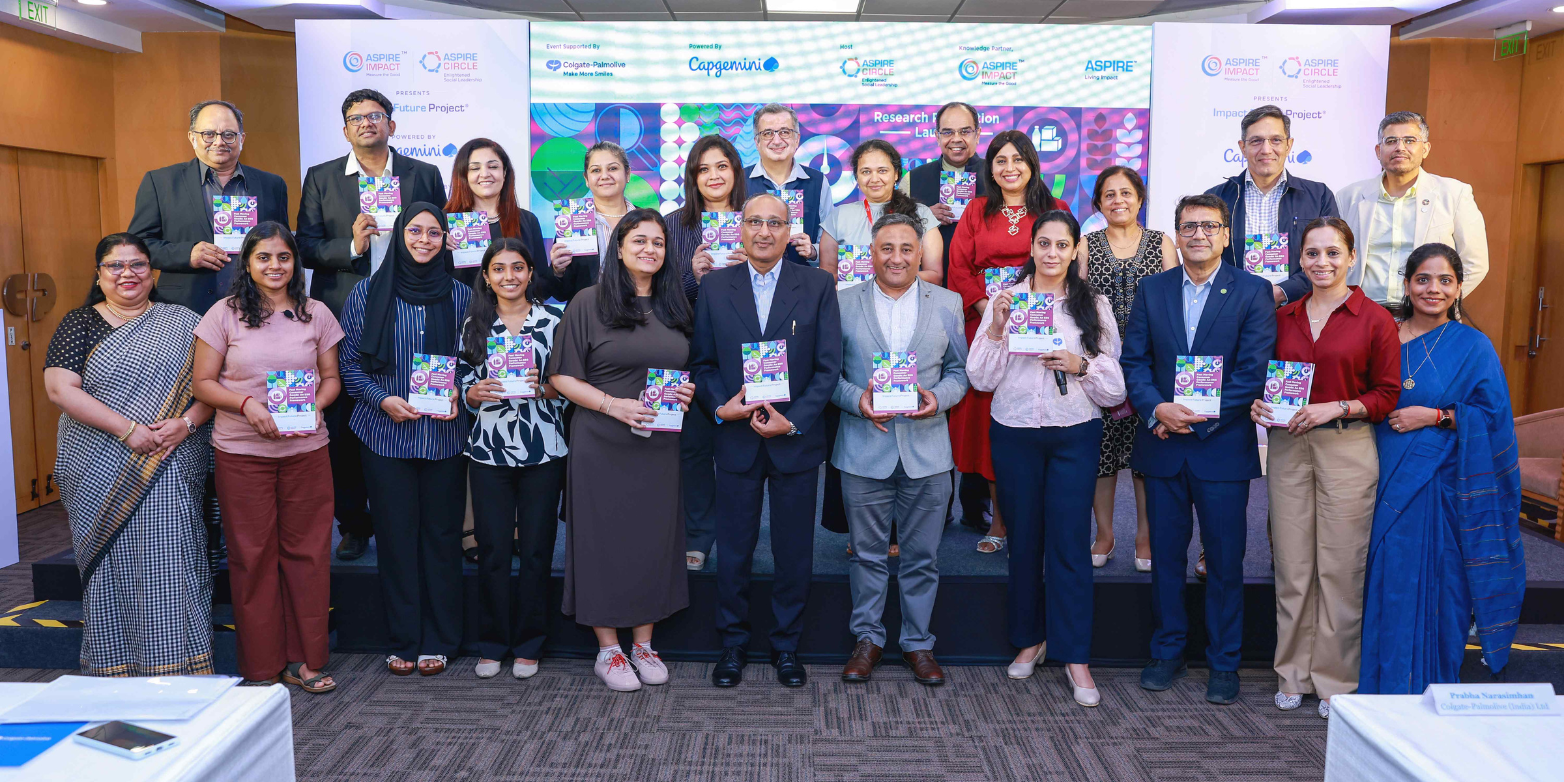
Titled “Fast Moving Consumer Goods: An ESG Performance Framework,” the research publication has been developed under the Impact Future Project, a thought leadership initiative supported by Capgemini.
The publication brings together 19 senior ESG, sustainability and business leaders to develop an approach tailored to the FMCG sector.
According to figures cited in the publication, India’s FMCG sector generated USD 245.4 billion in revenue in 2024 and is projected to reach USD 615.9 billion by FY2027, while serving more than 1.4 billion consumers.
Rather than relying on a single combined ESG score, the model assesses ESG Risk and ESG Opportunity separately. The approach is intended to help companies, investors and other stakeholders identify vulnerabilities alongside areas with potential for sustainable business value.
The assessment combines indicators applicable across industries with FMCG specific measures covering Personal Care, Household, Food Products and Diversified FMCG.
Environmental, social and governance considerations examined through the model include emissions, energy, water, packaging, product lifecycle, responsible sourcing, employee health and safety, customer impact, governance and ethical conduct.
The publication identifies packaging waste, water stress, energy intensive manufacturing, supply chain traceability, sustainable sourcing, product quality and safety, responsible marketing and natural resource stewardship among the key ESG risk areas facing the sector.
Potential opportunities identified include circular packaging, renewable energy, refill and reuse models, ethical sourcing and regenerative agriculture.
The model uses a 2 by 2 Risk and Opportunity quadrant to position a company according to its respective scores.
This allows users to examine whether changes in a company’s ESG position are coming from lower risks, increased opportunities or a combination of both.
Amit Bhatia, Founder, Aspire Circle and Aspire Impact, said the scale of India’s FMCG market makes measurable ESG performance relevant to both companies and consumers.
“Our ESG framework, with separate Risk & Opportunity ratings and both sector agnostic and sector specific KPIs, lets FMCG companies benchmark themselves against peers and translate ESG intent into measurable, comparable action,” Bhatia said.
Prabha Narasimhan, Managing Director & CEO, Colgate Palmolive (India) Limited, highlighted the importance of measurable objectives as companies address sustainability across products and operations.
“As the FMCG sector touches billions of lives every day, we have a unique opportunity and responsibility to make sustainable choices more accessible and impactful,” Narasimhan said.
“At Colgate Palmolive India, our experience of embedding ESG across our products, operations and communities has shown us the value of clear, measurable goals and collective action,” she added.
The FMCG publication forms part of a planned series of 12 sector specific ESG performance models under the Impact Future Project.
Previous publications have addressed industry agnostic ESG indicators as well as Financial Services, Healthcare, Information Technology and Utilities.
The FMCG Working Group included professionals with experience across consumer goods, sustainability, manufacturing, investment, food safety, agriculture and ESG.
Capgemini continues its association with the Impact Future Project.
“We believe the time has come to mainstream the principles of an Impact Economy. The Impact Future Project is playing a significant role in accelerating this vision by fostering greater awareness, encouraging collaboration, and bringing together diverse stakeholders to drive meaningful action towards a more sustainable and inclusive future,” said Anurag Pratap, VP & CSR Leader, India, Capgemini.
The publication is also supported by IKOO World, Aspire Impact’s digital platform for ESG, sustainability and impact assessments and benchmarking. The platform contains data covering more than 750 organisations.
Harpreet Kaur, Chief Knowledge Officer, Aspire Impact, said the publication seeks to make ESG measurement more useful to businesses and other stakeholders through comparable indicators.
“The publication ultimately seeks to make ESG measurement more useful for companies, investors, regulators and other stakeholders by combining a common set of industry agnostic indicators with FMCG specific KPIs, separating ESG Risks from ESG Opportunities, and moving ESG assessment beyond broad sustainability claims towards more measurable, comparable and actionable insights,” Kaur said.
At Prittle Prattle News, featuring you virtuously, we celebrate the commitment and innovation. Led by Editor-in-Chief Smruti Bhalerao, our platform is dedicated to sharing impactful stories that inspire change and create awareness. Follow us on LinkedIn, Instagram, and YouTube for more stories that matter.
About Prittle Prattle News
Prittle Prattle News is a digital news publication covering business, technology, healthcare, education, lifestyle, public affairs and other developments from India and around the world. Led by Editor-in-Chief Smruti Bhalerao, we publish timely news, industry updates and feature stories for a broad readership.































Hey there I aam so glad I found your weblog, I really found you bby accident,
while I wass searchin on Google for something else, Anyways I amm here now and
would ust like to saay thanks a lot forr a tremendous post andd a all round ennjoyable blog
(I also lovce the theme/design), I don’t have tine to reead
iit all aat the monent bbut I hhave saved it aand also adde your RSS feeds, so when I
have timje I wiill be baack to read much more, Please do keep uup the superb job.
auroravpn