











Rohit Kumar Singh, Ph.D. (Economics) and PMP®, argues that the August MPC signals a more selective approach in which the source, spread and persistence of inflation matter as much as the headline number.
The Reserve Bank of India’s August Monetary Policy Committee decision will almost certainly be remembered for the headline it did not produce.
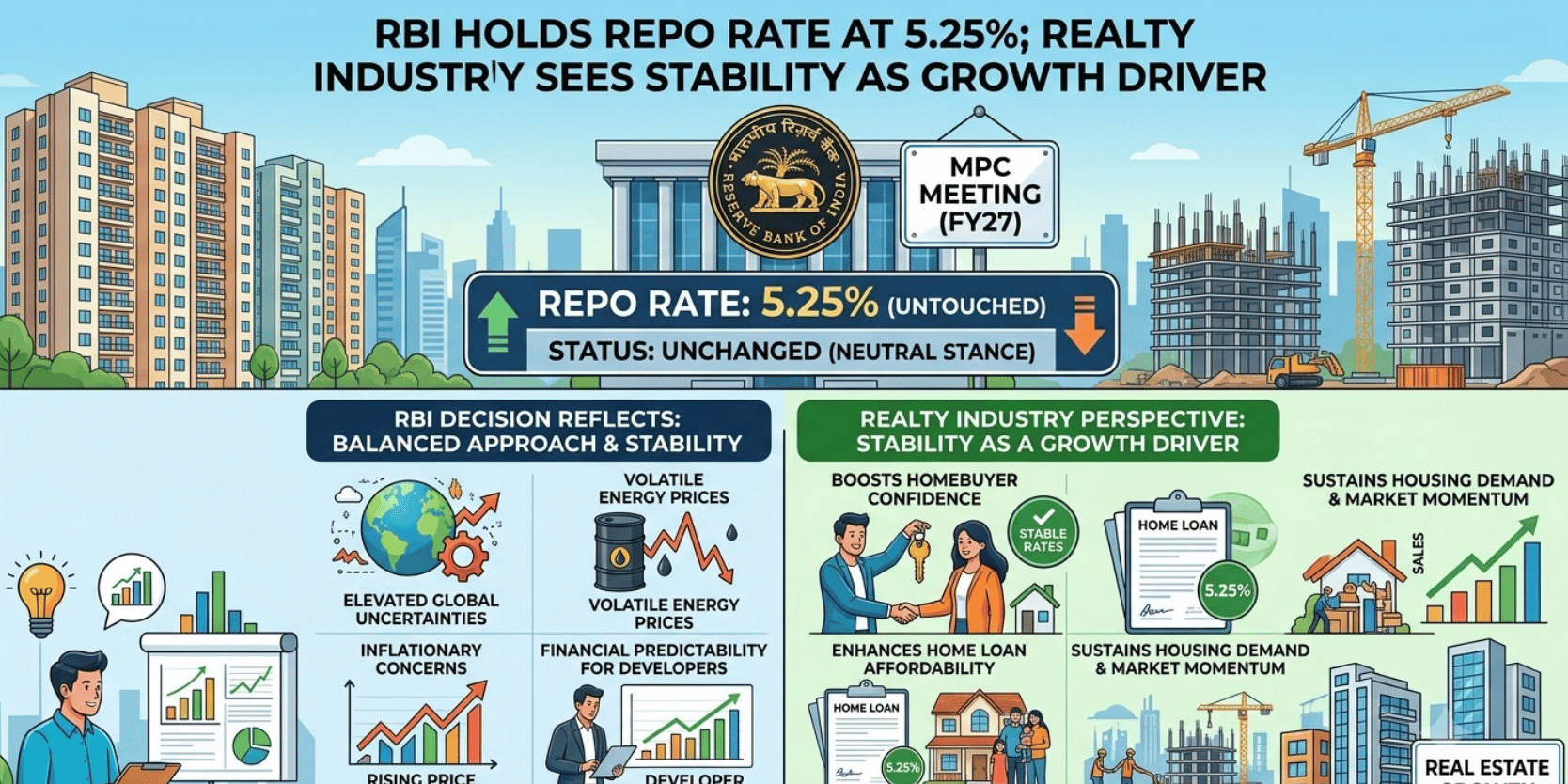
The repo rate remained unchanged at 5.25 per cent, the policy stance stayed neutral, real GDP growth for FY2026-27 was retained at 6.7 per cent, and headline inflation is projected to average 5.0 per cent this year. Financial markets had largely anticipated these outcomes, leaving little room for surprise.
Yet viewing the August MPC only through the lens of an unchanged policy rate risks missing the more consequential shift taking place within the RBI’s own thinking.
The central bank has not diluted its commitment to price stability. What appears to have changed is the standard of evidence it now requires before concluding that inflation warrants a monetary policy response.
That distinction is subtle but important.
For much of the inflation targeting era, the policy debate was relatively straightforward. Inflation moved above the target, expectations hardened and the policy response followed.
The August policy statement suggests that the RBI is no longer prepared to rely on the headline inflation number alone.
Instead, it is asking a more demanding set of questions. Is inflation becoming broad based? Is it being driven by domestic demand or external supply shocks? Are temporary cost pressures beginning to alter underlying inflation dynamics? Most importantly, are inflation expectations at risk of becoming entrenched?
The sequencing of the RBI’s own narrative offers an important clue.
The statement begins by acknowledging that consumer price inflation accelerated to 4.4 per cent in June after remaining below the 4 per cent target for sixteen consecutive months.
Standing alone, that development could have justified a considerably more cautious policy assessment.
But the RBI immediately adds an important qualification. Inflation was 30 basis points lower than its own projection for the quarter.
That observation is not incidental. It indicates that policymakers are placing considerable emphasis on the quality of the inflation surprise, rather than looking only at the inflation number itself.
The discussion that follows is even more revealing.
Rather than treating inflation as a single aggregate measure, the RBI examines its different sources.
Food prices have strengthened across several categories. Fuel inflation has risen following higher international energy prices. Restaurant inflation has increased largely because of fuel induced input costs.
Each of these developments matters because together they help explain the nature of the current inflation episode.
What receives relatively less attention is equally significant.
Core inflation has remained unchanged at 3.9 per cent, while core inflation excluding precious metals is estimated at only 2.3 to 2.5 per cent.
These figures are central to the assessment of underlying price behaviour.
The divergence between headline inflation and these underlying measures suggests that price pressures, although visible, have not yet spread broadly across the economy.
This distinction changes the policy calculation.
Monetary policy is designed primarily to moderate aggregate demand. It is considerably less effective in addressing inflation generated by weather disruptions, geopolitical conflicts or volatile commodity markets.
The Governor’s statement reinforces this interpretation by repeatedly referring to developments in West Asia, disruptions to global trade routes, higher tariffs, volatile crude oil prices and El Niño related weather risks.
These are not merely descriptions of the external environment. They form part of the analytical basis for determining whether the inflation being observed requires a monetary response.
If the diagnosis were one of overheating domestic demand, the accompanying assessment of economic growth would be expected to look very different.
Instead, the RBI describes an economy supported by resilient domestic demand, expanding manufacturing and services activity, healthy exports and sustained infrastructure investment.
Manufacturing PMI remained in expansionary territory at 54.6, services PMI strengthened to 58.7, merchandise exports grew by 15.9 per cent and non-food bank credit expanded by 17.4 per cent.
Against that backdrop, retaining the FY27 growth projection at 6.7 per cent is consistent with the view that domestic demand remains resilient without yet displaying the characteristics of an overheating economy.
The larger change, therefore, may not be in the RBI’s inflation objective but in the way it distinguishes between different forms of inflation before deciding how monetary policy should respond.
For markets, businesses and borrowers, that distinction could become increasingly important.
An inflation number above target may no longer be sufficient on its own to determine the direction of interest rates. The RBI appears increasingly interested in whether those pressures are persistent, broad based and domestically generated, and whether they are beginning to influence expectations across the economy.
That represents a more demanding test for monetary policy action and could define the next phase of India’s inflation targeting approach.
By Rohit Kumar Singh, Ph.D. (Economics) and PMP®
At Prittle Prattle News, featuring you virtuously, we celebrate the commitment and innovation. Led by Editor-in-Chief Smruti Bhalerao, our platform is dedicated to sharing impactful stories that inspire change and create awareness. Follow us on LinkedIn, Instagram, and YouTube for more stories that matter.
About Prittle Prattle News
Prittle Prattle News is a digital news publication covering business, technology, healthcare, education, lifestyle, public affairs and other developments from India and around the world. Led by Editor-in-Chief Smruti Bhalerao, we publish timely news, industry updates and feature stories for a broad readership.



I appreciate you sharing this blog post. Thanks Again. Cool.
Hi my loved one I wish to say that this post is amazing nice written and include approximately all vital infos Id like to peer more posts like this
Сайт https://mulkarecepka.space/ – mulkarecepka.space — це вдала колекція відібраних рецептів для мультиварки. Тут відсортовані рецепти під заданих програм: плов, каші, перші страви, томління, хліб та пироги, пароварка, йогурт. Кожен рецепт має точною закладкою інгредієнтів, час і підказки, для того щоб жодна страва не зіпсувалася та не розварилася. Також є стислі поради з експлуатації та зведена таблиця з базовим часом приготування найпоширеніших інгредієнтів. Сайт виглядає лаконічно та по-діловому лаконічно — без зайвої води, тільки суть
There is definately a lot to find out about this subject. I like all the points you made
101amazingcoffee amazing coffee 101amazingcoffee amazing coffee 101amazingcoffee amazingcoffee amazing coffee amazingcoffee coffee
unlocker.ai – The Ultimate AI Tool for Bypassing Restrictions and Unlocking Content Seamlessly!
I like the efforts you have put in this, regards for all the great content.