






Dr Senthil Gnanasekaran and Dr Piyush Bawane led the robotic Frey’s procedure on a 12 year old girl with recurrent congenital pancreatitis, with minimal blood loss and discharge on the sixth postoperative day.
Kauvery Hospital, Radial Road, has performed Tamil Nadu’s first robotic Frey’s procedure in a paediatric patient, treating a 12 year old girl with recurrent chronic pancreatitis caused by a rare congenital pancreatic abnormality.
The child had suffered repeated episodes of severe abdominal pain and pancreatitis for several years due to pancreatic divisum, a condition in which the pancreatic ducts do not fuse normally during fetal development. This affected the drainage of pancreatic secretions and led to repeated inflammation, progressive pancreatic damage, pain, nutritional compromise and recurrent hospital admissions.
Despite multiple endoscopic interventions and repeated pancreatic duct stenting procedures, the child continued to experience recurrent pancreatitis. As the condition progressed into chronic pancreatitis with persistent symptoms, a multidisciplinary team at Kauvery Hospital recommended definitive surgical treatment.
The team performed a robotic Frey’s procedure, a complex pancreatic surgery that involves removing diseased and inflamed pancreatic tissue while creating a drainage pathway between the pancreas and intestine to restore the flow of pancreatic secretions.
Carrying out the procedure robotically in a child is highly challenging because of the small operating space, delicate pancreatic anatomy and the need for careful reconstruction around critical blood vessels and ducts while preserving healthy pancreatic tissue.
The surgery was performed using the Da Vinci Robotic Surgical System, which offers enhanced 3D visualisation, tremor filtration, precision and dexterity during complex reconstructive procedures.
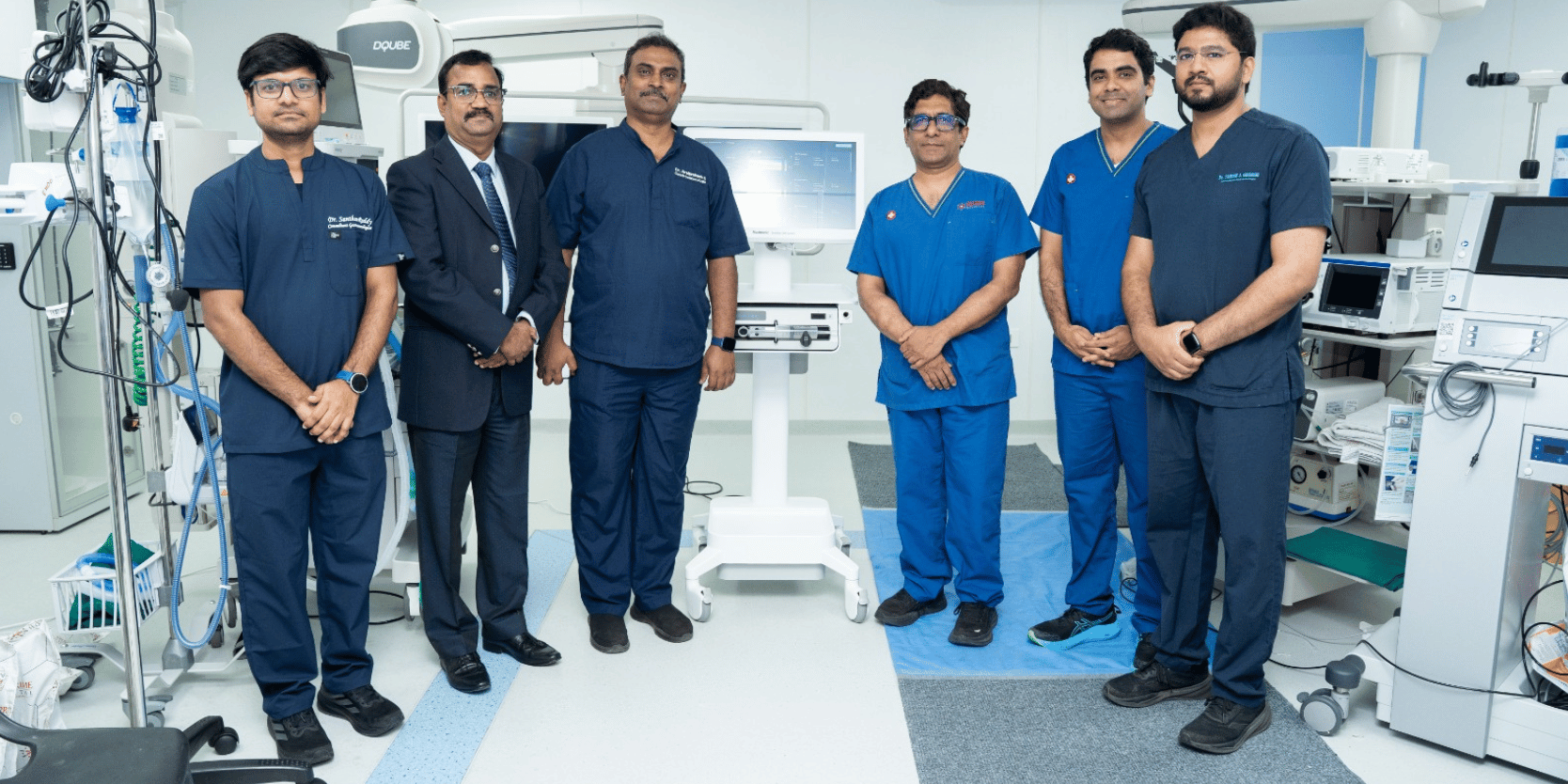
The procedure was led by Dr Senthil Gnanasekaran, Clinical Lead, Abdominal Organ Transplant and HPB Surgery, along with Dr Piyush Bawane, Clinical Lead, Medical Gastroenterology. The surgery was completed with minimal blood loss. The child had an excellent postoperative recovery, experienced reduced pain compared with conventional open surgery and was discharged home on the sixth postoperative day.
“Chronic pancreatitis in children is uncommon and can significantly affect quality of life because of repeated pain episodes, hospital admissions, nutritional compromise, and long term pancreatic damage. Frey’s procedure is among the most complex pancreatic reconstructive surgeries and performing it robotically in a child requires extraordinary precision and expertise. The robotic platform enabled us to perform meticulous dissection and reconstruction through a minimally invasive approach, resulting in less pain, smaller scars, minimal blood loss, and faster recovery for the child,” said Dr Senthil Gnanasekaran.
“Robotic pancreatic reconstruction surgery in children is exceedingly rare worldwide because pancreatic surgery itself is among the most technically demanding specialties in gastrointestinal surgery. This successful procedure reflects the growing advancement of robotic hepatopancreatobiliary surgery and paediatric minimally invasive surgery at Kauvery Hospital. More importantly, it demonstrates how advanced robotic technology, combined with multidisciplinary expertise, can help children recover faster while minimizing surgical trauma and improving long term outcomes,” said Dr Aravindan Selvaraj, Co Founder and Executive Director, Kauvery Group of Hospitals.
Kauvery Hospital continues to focus on advanced robotic gastrointestinal, HPB, transplant and minimally invasive surgery in South India, supported by specialised clinical teams and advanced technology.
At Prittle PrattleNews, featuring you virtuously, we celebrate the commitment and innovation. Led by Editor-in-Chief Smruti Bhalerao, our platform is dedicated to sharing impactful stories that inspire change and create awareness. Follow us on LinkedIn, Instagram, and YouTube for more stories that matter.
About Prittle Prattle News
Prittle Prattle News is a digital news publication covering business, technology, healthcare, education, lifestyle, public affairs and other developments from India and around the world. Led by Editor-in-Chief Smruti Bhalerao, we publish timely news, industry updates and feature stories for a broad readership.
















Add Comment